Despite the fact that humans can’t help doing art and have always done so, the world of art is full of rule making and snobbery.
There is a famous story about Constable, that Reynolds chided him for using such lurid colours in his landscapes, advising using tones related to a valuable old violin. Constable is reputed to have carried the old violin outside and laid it on the grass to demonstrate how mistaken that was. I’m not that fond of Constable’s paintings but that story is an example of rules and how they can lead to stagnation. I’m also pretty sure too that more people have heard of Constable than Reynolds and can picture a painting more readily.
The other thing that story inadvertently highlights is the question of who you are painting for. Reynolds was envisaging elite admirers and customers and also that you are painting to fit with an historic story of painting ideals. Constable was painting to suit himself and his view of reality and perhaps also more ordinary viewers of his paintings.
Hidden rules of this sort are everywhere, even in the world of amateur art. Can I suggest that you be aware of them, but also ignore them if they don’t help you to achieve what you want to do? You should paint or draw to please yourself, to keep developing your skills and to sometimes make yourself smile at what you’ve managed to do. It is even better if you can please other people at the same time.
Rule 1 – Don’t paint by numbers, which is a term for drawing lines round everything to establish shape, size and position and then filling in the shapes with colour and or tone.. This is pure snobbery and I suspect has only really existed as a rule since the Impressionists. The Sistine ceiling was painted by sketching in some detail into the wet plaster then following with the paint blocks.
The idea is that you should be able to choose and make a mark without drawing it out in detail and then filling in the blocks. The level of natural skill and vision required to even get close to that is immense. If you can aspire to get nearer, it is enough. Do less drawing and simplify the structure of your paint if you can but don’t think you are a lesser person if more freedom doesn’t work for you. A good example of this is wet on wet watercolour painting (you can do it with acrylic as well to some extent). The opportunities for chaos and disaster are as large as the chances of creating something free and inspiring. Keep trying though, as you may get a pleasant surprise. Here is one of a sun going down seen through a window in the rain. I did it as a sketch for another painting. I thought it had just gone out of control but later saw a good bit within it and over-painted a couple of unwanted marks.
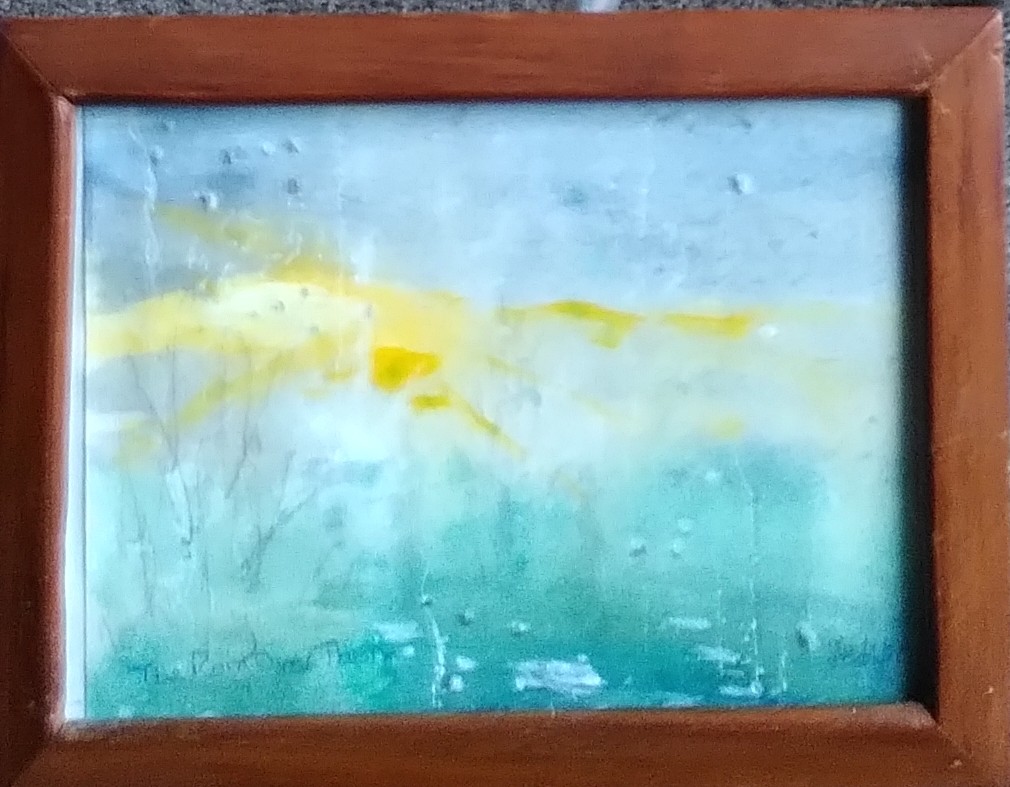
Incidentally there is a halfway house in watercolour between blocks of pure colour and wet on wet. Because of its transparency, if you start light, you can gradually add darker layers over the top. If you do it reasonably quickly and use you brush in the right way, you can activate some of the pigment in the lower layer to produce subtler gradations like you can get with wet on wet. You can also brush water onto the relevant areas of the lower layer, to activate the pigment in those areas before you add the higher layer.
Rule 2 – Develop your own style and stick to it. Sadly this is sometimes necessary if you want to have a loyal customer base. Galleries particularly like artists to do this. It is good to try to individualise your work but it shouldn’t be a shackle for you, holding you back from invention and creativity.
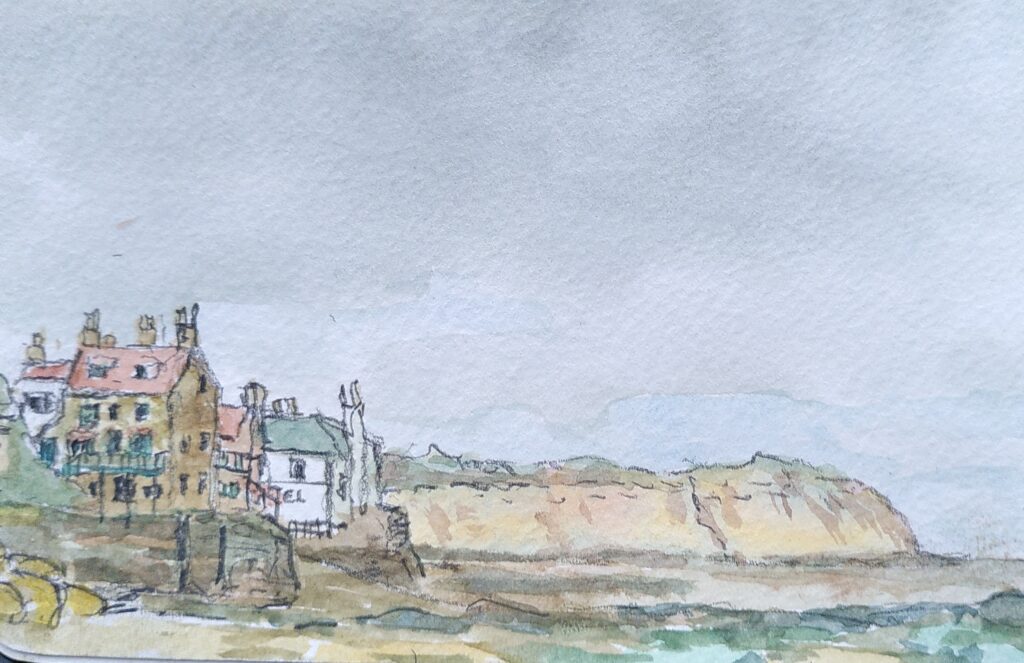
Rule 3 – Paint big. This attitude pervades in a lot of art. Anyone who went to the recent Turner Prize exhibition in Bradford will have seen this in action. If Turner had tried to exhibit the beautiful, tiny watercolours that are held in the National Gallery of Scotland collection, he wouldn’t stand a chance. Paint/draw/collage whatever size and with whichever medium you can make work and that achieves what you want to achieve. It is nice if you can show respect for whatever subject you have chosen too. Not a patch on Turner, but this one of Robin Hoods Bay is only 9cmx14cm and pleases me.
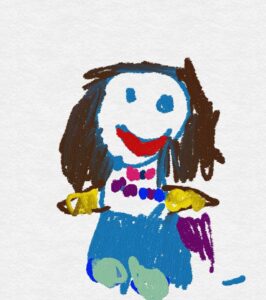
Don’t mix mediums. To some extent this is practical. Oil paint doesn’t mix well with other mediums. Modern paints are now much more flexible. Surprisingly effective results can be obtained by mixing opaque and transparent mediums, for instance. Read about the limitations and abilities of the mediums and methods but also carry out your own experiments. Scraps of paper allow you to test something before you put it on your work. Give yourself freedom to try out different ways of making marks, with different tools and materials. Enjoy playing like that child’s drawing at the top.
There is a term applied to art, that is often used in quite different ways, which is ‘artistic license’. I’m not very fond of the term, as it implies it is something used only by artists and some people see it as akin to lying. When we look at anything, all of us are able to concentrate on what pleases us and ignore what does so less, like the cars roaring past an attractive scene and their smell and noise. When things are committed to memory we are even more selective. When we paint or draw we are always painting or drawing emotions to some extent. We are just making a hard copy of our normally selective vision and memory.
That is enough rules for today. Be aware of the rules and treat them as possible helpful guidelines but don’t let them hold you back from expressing yourself. Try to learn the little tricks that allow you to achieve a more fluid and lively look with improved textural feel. Recognise when to pause something that is going out of control and when to quickly remove some of the paint with a rag to make it easy to try it again later.
Enjoy watching and experimenting. Don’t tear things up and instead look at them later and see whether they can be rescued or which bits worked better and can provide a lesson for later.