Arran 2024 Day 3


My first short stay on this wonderful island (helped by glorious weather). Day 2 and we’ve walked and cycled loads already. Ruth has been up Goat Fell, while I walked round Brodick Castle grounds and the local area. We’ve been to see the Stone Circles at Machrie and Ruth walked to the Kings Cave, while I sketched below the basalt columns of Drumadoon Point.
The result so far.


There is a strong tendency in science to disapprove of anthropomorphism, meaning attributing human characteristics to animals. There is good reasoning behind that, but I suspect there is also a great deal of species snobbery involved as well.
It is true that we can’t tell what is going on in animals minds. Sadly that is also true of other people’s minds. With other humans we do have more clues because of shared experiences and the use of language but all sorts of things interfere with the reliability of the inferences that we make from what we observe and what people tell us. Modern technology, such as brain scans, can help in the rigour of our studies, but our understanding is still very fragmentary.
So why do I think the ‘avoid anthropomorphism’ stricture is also snobbish. Well we have a history of believing that we are totally unique and superior. It is even built into many religions. Many more people than now also used to think that women and children were also on some lower level and that reasoning about their behaviour was difficult. Most of us have moved on from that.
Avoiding comparing animals with humans risks missing out on vital clues about behaviours. If an animal looks embarrassed, then it is possible that they are experiencing something similar to our own reactions in a comparable situation. After all a very significant proportion of our own daily behaviour is controlled at a sub-rational level. To assume that animals can’t be reacting like us is just vanity.
Elsewhere I have said that I think that animals have some form of ‘artistic’ impulse. That is a two way assumption: that, in some way, the animal is thinking about what they are making or doing in terms of what it looks like but also that when we make or do things we are operating with impulses that are not entirely unique to us. That is zoomorphism.
I am just reading ‘Femina: A New History of the Middle Ages, Through the Women Written Out of It.’ by Janina Ramirez. Coincidently I am also watching ‘Art that Made Us’ and also ‘Nature and Us: a History Through Art’ on BBC iplayer. All these cover some similar ground, weaving their own story around similar times, people, place and objects.
It is important to remember that all history stories are selective, interpretive and sometimes even polemical. Also that the writers operate within the realm of their own knowledge, beliefs and the paradigms they have inherited from others. In addition they have to operate with the evidence available and this can vary considerably and sometimes speculation is the only real option. It is important that we recognise that speculation and also look for the questions that are not being asked.
In the above histories some time is spent looking at the different tribes and peoples moving through the landscape of the British Isles from the arrival of the Romans to the end of, say, Elizabeth 1’s reign. There are Picts, Celts, Anglo-Saxons, Vikings and more, all coming into and going out of different parts of the islands, fighting, raiding, settling, mating but also, very importantly, trading. Nobody knows exactly what happened or all the movements from one place to another.
As I was taking all this in, I started to think about language and went off on a trail looking at Welsh, Irish and Scottish Gaelic, Anglo Saxon English, Norse, Latin, French. When you add in barely mutually understandable dialects, you realise that all of these and more were co-existing and influencing people’s behaviour and interactions. When you listen to the history stories there is a tendency for them to assume that Latin and French, for instance are being used by the ‘educated’ few, or that the fact that Welsh now exists mainly in Wales means that all the Welsh speakers were driven out of England when other groups came in. While this drift is true, it hides a more complicated day-to-day situation. At any one time many people would just have stayed where they were and adapted to the changed circumstances.
One of the glues in this complicated situation is trade. Among the objects found in archaeological digs in these islands are elements that come from all over the then known world. Between their origin and their final resting place there is a continuous chain of more ordinary people exchanging goods, passing on manufacturing techniques, discussing and copying designs and haggling over prices.
These exchanges are not carried out exclusively in mime. Bits of all sorts of languages would be used, drawings might be scribbled on archaeologically useless scraps of whatever was to hand, and different coinages would be assessed and traded. This doesn’t just happen at trading centres, but between ordinary individuals across disputed territories, who are just getting on with their daily lives.
There is no one standard English language to day and there never has been, but we all manage to communicate more or less successfully. When I was young there were no regional accents on radio or TV, so it was often harder for some to understand some others. The irony of the current fusion of accents is that local differences are rapidly disappearing. When I visited family in Cumbria, I would hear broad dialect/accent that I rarely hear today. At the same time, if I watch a Norwegian program with subtitles, I can still hear some of those dialect words used in Norway. Similarly, when I was young a lot of my friends were Jewish. At school they talked the same as me, but at home they would often be surrounded by Yiddish, Hebrew and quite likely at least one other European language. I still have random Yiddish words floating about in my brain. Similarly there were Muslim families who were regularly using at least three languages at home. All people and living languages have always been, and still are, complicated mixes.
I mentioned mating somewhere in there and this clearly has an effect on how people interacted in history, but I think we’ll leave that for another post.
For a lot of people part of the joy of a garden is wildlife. Ours is certainly built to attract it, though the birds always seem to ignore the bird boxes in favour of the scruffy hedgerows.
We also have bird feeders. The arguments for and against are difficult to balance, but we have them. Considerable time has been spent stopping grey squirrels getting at them and making sure that large birds don’t dominate too much.
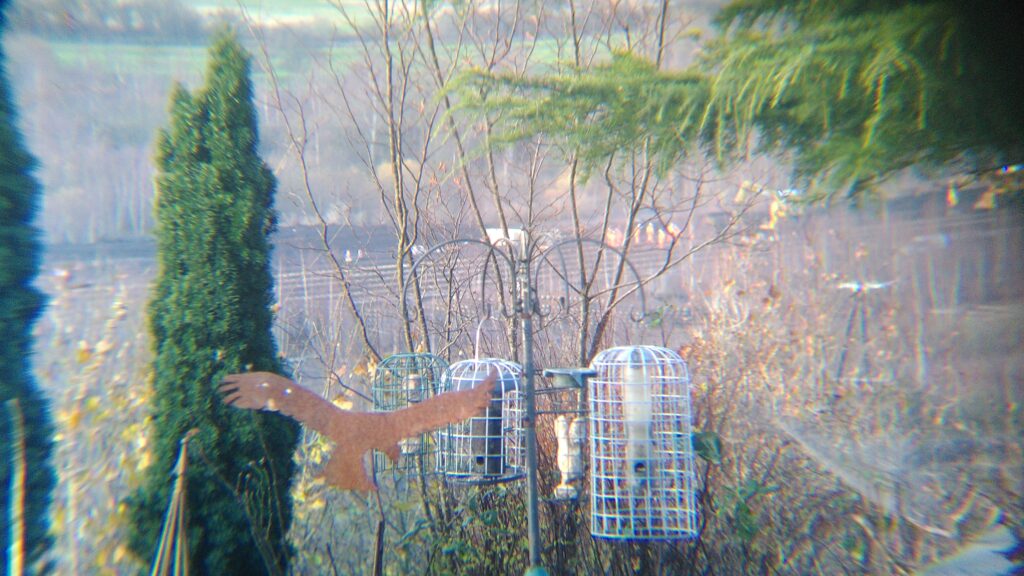
Recently I have been filming from the house using a little telephoto attachment on an old smart phone. Below are a couple of mixes from the filming. Warning – the first contains a sparrowhawk. The second is a medley of clips with bird sounds recorded in the garden.

A short trip round some Scottish favourites, with time for some sketching.


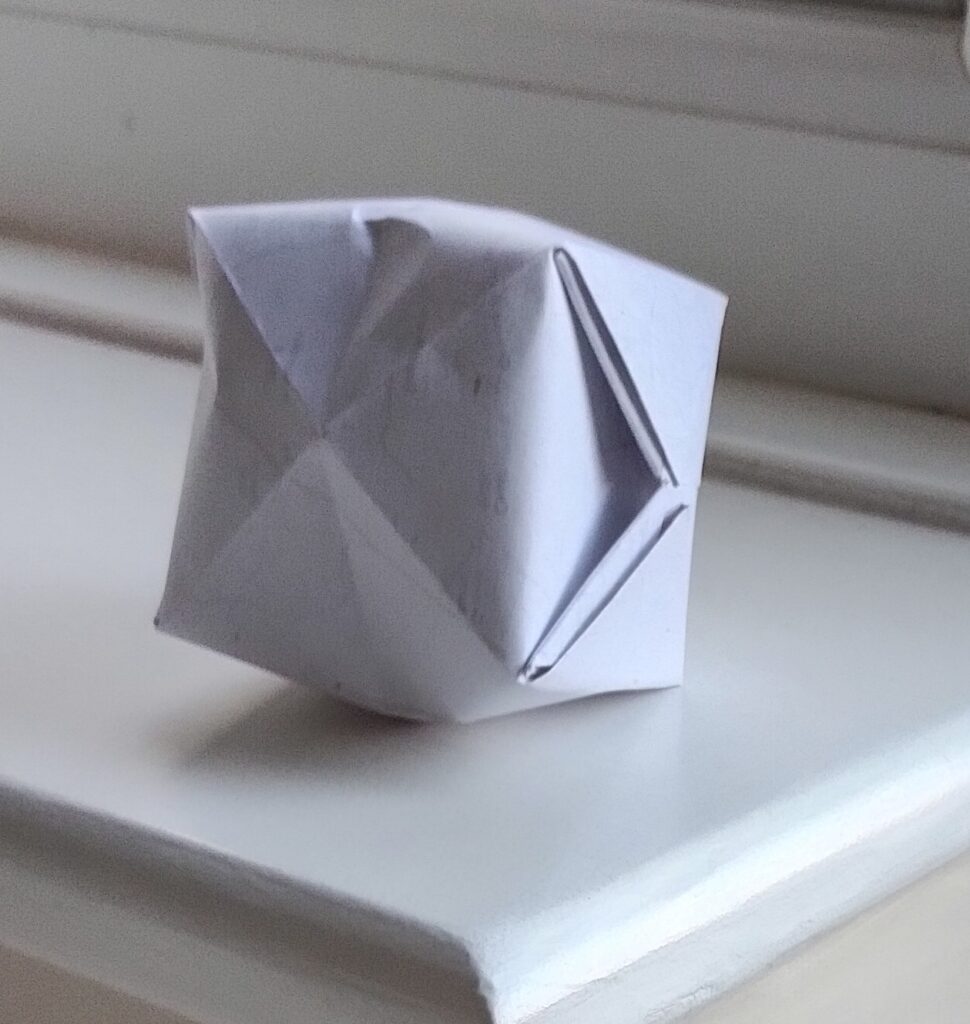
My good friend Stephen and I took advantage of the chance to use the studios of David Mayne and Mick Kirby Geddes, to have a play making some sculptures. As usual a great couple of days with some interesting people. Here are the results:
Stephen’s:


Mine:


This is just a quick note on how my brain seems to have developed in relation to all the experiences I have had. I hope it might add an insight into brains in general and making the best uses of the human ability to see patterns. Who knows, you might start looking around you and begin to see similarities in things you meet every day.
After a number of below the counter jobs, I started work in a supermarket when I was 14. At the time they were generally small and ‘new fangled’.
As I learnt what to do and how to do it efficiently, my curiosity about the inner working of things started me seeing connections. This in turn led to me gaining the confidence of the management, as they realised I could be trusted with more complex tasks or with adapting to working in another store. I started to understand stock management in the shop in both the public and warehouse areas. Unloading deliveries I became aware that some came from a central supermarket warehouse and others from individual companies and that the delivery vehicles had to be loaded so the that the first delivery was at the back. I was getting my first glance into the world of logistics.
After a brief detour into Fine Arts, I was at Technical College studying, amongst other things, Business Studies and Economics. To earn some money, I worked in turn at a global book distribution company, long before Amazon came into being, and then a company that made and serviced domestic appliances and catering equipment. Both of these gave me insights into an extended range of business organisation problems and I started to see similarities in what is called ‘the problem space’.
Over time I came to work on problems including managing manufacturing processes, running libraries, controlling remote machines, connecting information with geographical locations, managing utility supplies, billing, payrolls, planning bus routes and analysing usage, running chemical works, telephone directory systems, scheduling maintenance in all sorts of situations, credit rating, help line management, managing education and training, emergency planning and on and on.
Each of these situations is different but there are many underlying similarities. As time goes by it is possible to develop the habit of seeing past the jargon and detail of any new area or problem to see these underlying patterns and to use them to speedier understanding of possible solutions and techniques. It is important to do this without failing to pay respect to the differences too.
I won’t go into all the technical jargon or theories but I will give you a couple of examples based on what I have already written here.
The first underlying example is a queue. Queues are everywhere. We all have to deal with queues. In the supermarket where I worked, we had to put orders in early enough to get them before we ran out of stock, because of the suppliers delivery queue. On our side we also had to take into account the queue for space in the warehouse, so that customers weren’t tripping over boxes piled in the store. Managing a production line is a queue problem. Managing staff job lists is a queue problem. Traffic management and logistics involve queues. There are queues in nearly all the job areas I mentioned earlier.
Related to the idea of a queue is the pipeline. A pipeline has a flow capacity it can deal with and, once it reaches that capacity, there can only be problems in trying to exceed that capacity. Interestingly we each are a pipeline and we have all been in a situation where we have felt loaded up to and beyond our capacity. In real world problems the pipe is not just a pipe but a complex network of different sized pipes and their individual performance is dependent on the whole. The internet, all the utility supplies we get, delivery companies, service points and road capacities are just some of the pipelines around us. The electric cables in your house are a pipe system and if you exceed the capacities you are likely to have a fire. Even the way a teacher delivers information to a class can be seen as dealing with different capacities to take on information and the teachers capacity to cope with different speeds of delivery.
That last one is intentionally true but slightly eccentric. It is not clear how useful it is to spot the insight into how that aspect of teaching delivery works. As I said earlier, there is a point at which you have to stop yourself getting carried away with underlying patterns.
I started this piece after I was reading about Bitcoin and its relatives and then the BlockChain technique that underlies it. This in turn was related to a whole set of other underlying techniques that is relies on. One of them goes back to a completely different and surprising area – single track railways. When a single track railway has double track ones at either end a solution is needed to stop trains meeting head on. One method of solving this is to have a box at each end that can hold a token. There is only one token and you can’t set off on the single track if you don’t have the token. The driver at one end can pick up the token and then drop it off at the other end. Systems such as this exist for canal tunnels too.
Those of you that are beginning to join the dots will have spotted the problem with the single token solution. I’ll let you work that out for yourselves but will end with the conclusion that looking for patterns and connections, learnt by a mixture of experience and training, can speed up your appreciation of new problem spaces and help you to see possible improvements and potential pitfalls. Good luck