Categories
Briefings

Reasoning, Evolution and Cuttlefish

I should have put Questions in that title but it was getting a bit wordy. Hopefully it will make sense in a minute.

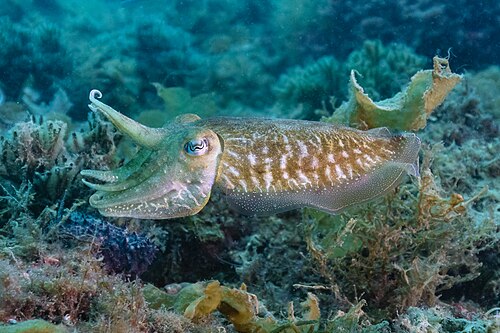
Let’s gets straight to the catchy bit. Like many living things, cuttlefish reproduce by mating and one common tactic in the mating game is for males to try to become dominant or ‘alpha’. Unlike most of us, cuttlefish can change their surface colouring (other than by adding makeup or foolishly sitting too long in the sun). They do this in response to stress and as a way of sending messages, like bird calls.

Now, people who look at evolution to simplistically see the ‘dominant’ word and think that is all that matters. The rush out and buy supplements and sit staring at themselves in gyms. This applies to all genders and sexual preference because dominance applies in a groups.

The cuttlefish is a good example of alternative strategies. The males, especially smaller ones, can adopt female colouring on the side facing the dominant male and a male display pattern on the other side. Clever. Some males also herd females into a hollow and sit over them, getting exclusive access. Other clever males can eve adopt female colouring and sit in the pile under the dominant males quietly mating when the chance comes.

So far so very male minded. The male cuttlefish is either a bulky bully or a sneaky smally. Evolution is way more complicated than that and females instinctively know it (they have evolved that way). The classic male interpretation of the herding into a hollow habit is that the females trade some loss of freedom for protection and access to the dominant gene. How simplistic.

I have said elsewhere that evolution is the survival of those that happen to survive, to try to emphasise this complexity. The statistics will indicate that there is no one way for a single individual to predict what will make their offspring survive. There are options that are simpler to adopt and that also sit higher up in the pile of options but there is also variation in both mating and offspring care adopted. This indicates that the statistics often favour those who adopt each way bets. So females let the dominant male sit there on edge guarding his harem and then sneak off and mate with other males who have shown the resilience not to give up and the with to appear in the right place for the opportunity to arise. That ensures the most favourable balance of gene survival to deal with the complexities of survival.

So what has all this to do with reasoning? The first stage of reasoning is hinted at above. You only get past the simplistic understanding of evolution if you ask questions. The questions to ask here is ‘how does the male cuttlefish decide which range of colours to adopt?’ and ‘how does it decide that fighting is not the best option but sneaking into the hollow has chances? If you think a bit further on from that you can ask how the successful adoption of a tactic get passed on to offspring? Is it a better instinctive colouring ability or a brighter brain?

Of course I don’t know the answers to those questions but the existence of the questions has wider implications for the ways we reason about all sorts of things. Sadly the habit of asking questions seems to have got a bit lost in some of the narrower results led approaches to education that we have adopted. We already had a habit of using reasoning to show dominance in various ways. As well as helping people recruiting others to jobs and courses, exams and qualifications have always been used in that way. I think we are in danger of losing the habit of asking questions about our own reasoning. As with evolution and the cuttlefish we need to keep our options open. We must remember that ‘fitness’ to purpose of a person can’t simply be measured by exams but involve adaptability and the ability to ask relevant questions.

Categories
Art Briefings Paintings

A River Tale for the People of Shelley Art Group

Shelley are visiting The Hepworth Gallery Gardens in Wakefield on a sketching outing. I thought I’d give you a bit of (hopefully) entertaining background on one fascinating aspect of the place.

The Gallery is actually built on an Island. On one Side is the River Calder, which of course meanders there all the way from the hills above Hebden Bridge. Alongside the route of the Calder are various bits of canal that are sometimes pure canal and at others join the river. From the Hepworth onwards, the canals start getting much bigger. If you are sat in a narrow boat in one of the locks you suddenly feel small and vulnerable.

‘Hepworth’ Island

Just by the Hepworth a canal cut runs away from the river and the Hepworth is on the island made by that bit of the canal and the river. On the other side of the bridge from the car park there is a boat yard servicing the canal. I once watched a canal boat being lifted from a lorry, over the boat yard and into the water by the footbridge. You are now in the flat and marshy land east of the Pennines.

Shelley Village Hall is in a different sort of place. It is on a hill that is part of a river catchment area. On one side of the watershed a river runs down the valley towards Huddersfield and on the other the water runs down into the valley through Denby Dale. The river running to Huddersfield joins the Colne and Holme rivers and heads north east joining the Calder at Cooper Bridge. Meanwhile the River Dearne on the other side heads off to the Sculpture Park before shooting off south east to join the Rother going through Rotherham. Rivers seem to do odd things.

All the rivers mentioned so far are eventually headed towards the Humber and Hull. They are part of a much bigger catchment area. One part starts in the Hills above Settle, where rivers head across to Lancashire, up to Cumbria, over to Tyneside and, of course, down through Yorkshire. All those Dales and places like York that we like to visit have rivers that eventually end up in the same place.

Perhaps more astonishingly is all the rivers, like the Dearne that eventually reach the Humber from a southerly direction. The Dearne joins others coming down from the south Pennines, including the Don before joining the Ouse on its way to the Humber. That wasn’t always true though. Until some amazing river engineering by a Dutch engineer the Don joined the most astonishing tributary of the Humber. This one originally flows through another place associated with the Arts – Stoke on Trent. Yes, a whole set of rivers on the other side of the Pennines meander around as the Trent heading southwards, then turning east and finally north, before joining up with the water from Shelley and heading to the sea.

So, as you sit sketching on your engineered island, think about the amazing geography of rivers and human attempts to control and use them. Your Shelley water flows down below our house in Ossett in both a canal and a river. Coal from pits under Thornhill was originally transported on the canal, before the railways were built in the same valley. Incidentally, the flood defenses built near the Hepworth lost a traditional foot route and Ruth is part of a group working with the Council, the Canal and Rivers Trust and Sustrans to get routes restored for pedestrians and wheelchairs and cyclists. Another set of connections in my fascination with what I’ve called Paths of Desire.

Categories
Briefings

A message to my grandchildren

And anyone else’s children and grand children

I’ve just been drilling holes through several strips of corrugated roofing at a time. It is a slow and boring job. Hard on old wrists too. That is just one of the many things I now do (as a retiree) to please myself and to help other people.

It made me think about schooling, because I failed (the word they used then) to get into the more academic school that my brother ended up going to. That meant that I went to a school where I did woodwork, metalwork and pottery. All skills I have used in one way or another throughout my life. We also did technical drawing, like an architect or someone designing a machine would use. I was absolutely awful at that and still am.

What I’m writing is not about how useful practical skills are but about how early failure, or failure at some things, does not define you or hopefully limit your chances.

When it came to the exams at age 16, I didn’t do well at those either. I aced maths but not others that I was supposed to be good at and failed several of the nine I was put in for. I didn’t care much because I’d decided to try Art School. It seemed better for me than the hair dressing option anyway.

At school I had been kind of adopted by people for whom art was a normal part of life but when I got to Art School, I realised just how little I knew about it. I also came across my first ‘posh’ people, with different sorts of names, different schooling and assumptions about life that were alien to me. Not everyone of course, but it was an eye opener. I also realised that I could not imagine how I would make a living from art, other than as a teacher and I was still off teachers. Oh well try again.

At Technical College I met again with others from my school who hadn’t flown through it acing everything either. I still couldn’t decide what to do but at least the sandwich course I did gave me work experience beyond stacking shelves and other bits and pieces I’d done for years. The result was that I didn’t ace things again, despite it becoming even more obvious that I could have done better if I’d tried. I was also socially awkward and embarrassed (though I think I hid it well) and often went along with things like heavy drinking that didn’t help anything.

The tale goes on but there is no point here in listing my series of failures to live up to expectations. I never found a course or job that completely felt like what I wanted to do. But I’ve had jobs all my life that keep me going. I slowly realised that I could make things better by using my skills and also that I could explain things clearly to people. I discovered that sticking at things was easier than I thought. I’ve always tried to keep on doing other things that help make me happy too.

I hope you can find a way through all the ups and downs too. Love from a grandad.

Categories
Briefings

Calculators, AI and Training our Brains

Ruth just introduced me to the idea for the need for the Friction given by human interaction and debate for keeping our brains active and developing. Aside from dismissing it as the next fad in brain training circles and Ruth’s understandable need to remind me of of reclusive tendencies, I realised that it gelled with earlier things I have written and said. When calculators started to become compulsory for schooling I saw that students started to trust them too much. They didn’t have the general estimating ability to see that their answer was way too small or large. My own struggles with mental arithmetic have at least schooled me in checking those problems of scale. Those struggles are one form of stimulative friction. I started giving lessons in estimating to counter the calculator tendency.

The huge rise in the trust in AI, at the same time as the rise in doom stories, is another calculator moment. We need to find ways of helping people to see through the mist of AI to recognise what is trustworthy and what is not.

I’ll be mulling over that from now on.

My last AI briefing was https://valleycreations.me/wp-admin/post.php?post=5083&action=edit

Categories
Art Briefings

Our Hubris

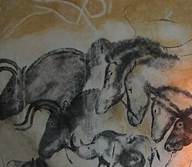
Hubris, vanity, ego, whatever you want to call it we are full of it. I certainly have it but try to keep it under control. Weirdly, I came up with the idea for this bit of writing after being irritated by an TV program on cave art. What art is and its role in life is little side interest of mine, and early art is part of that.

The program was about the wonderful and varied cave art at Chauvet. As usual I couldn’t help noticing when the admirable experts and program makers put across messages that were slightly more open to question. We all do that too, making sweeping statements to convey our message more impressively. I went researching and a series of things I came across gelled into something I thought worth saying.

Chauvet Fragment

Let’s start with the art. Art is built into all of us. If you make clothing, personal decoration or decor choices that is a form of art. Current research suggest that people have been making art for around 70,000 years. That is not just us, the badly named Homo Sapiens, but also Denisovans and Neanderthals

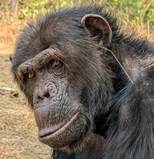
Chimp with ear decoration

Art is a form of communication. It is also about display, attraction, entertainment and showing off. Animals of all sorts select objects to show off, make structures to attract, do dances and carry out mimicry to attract interest, sing to draw attention and to ward it off and a whole range of other things of the sorts that underpin all art.

You can discuss forever what makes good art, what conveys more meaning, what is more moral, what is prettier and so on, but it is all art. Likes and dislikes are personal. I really dislike Faberge eggs. I admire skill but there is much in the world that I think of as fashionable rather than admirable and I don’t like fashions and fads in general. Give me a good cave painting any day.

Faberge Egg

In the Chauvet caves there are a full range of marks and techniques. These seem to start at the front end to the cave, with simpler marks, generally in red ochre pigment and range to further back, generally in charcoal and with more sophisticated representational elements, such as lions and bison.

I have to be careful here of that word ‘representational’. It is a word that people load with hidden meanings of superiority in one way or another. People can dismiss abstract art because they ‘can’t see what it is’ or others can equally dismiss art because they (or more often others) can see what it is and therefore ‘it lacks sophistication’.

In Chauvet the work at the front consists mainly of patterns of marks and sprayed hand prints. These are almost certainly earlier and perhaps show less sophistication of technique. The important word here is ‘technique’. Some can be born with a more natural grasp of technique but all can use practice to develop technique. In addition we can also learn technique from others. Human species are not alone in possessing this range of technique development skills.

Finally we come to the question of who did the cave art. I’m not going to speculate on Chauvet because I don’t know. Looking around statements that people make about cave art and relating it to evidence we have about our own development, highlights the hubris contained in those statements, as mentioned in the title here.

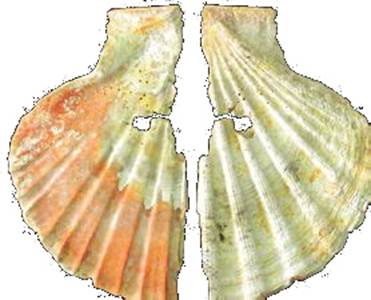
Neanderthal Shell Jewelry?

There is suggestive evidence that we lived in the same timescales as Neanderthals and Denisovans for a very long time and that we almost certainly shared locales with them at the same time. Ancient DNA evidence is hard to find but what there is indicates that we share DNA with Neanderthals. How much sexual activity there was we can only speculate on. It is not impossible that the same is true of other hominids. Their development is not completely clear and classification of them is based on the usual, often tenuous, observation of characteristics that we think can be useful in grouping things together or separating them. Taking those classifications and using them to speculate about behaviours, meanings and who did what can sometimes lead to a narrowing of views and options.

What I’ve written so far hides the thorny question of spirituality, which is often attached to discussions of art, archeology and many other things. Elsewhere I have speculated about dogs sometimes going round in circles before lying down. How do they decide when it feels right to stop the circling? ‘Feeling right’ is not really defined by argued logic. That doesn’t make it superior to argued logic. It can’t be explained in a rational way. Sprituality is just one shade of that internal feeling of right or wrong.  We need to recognise that what feels right or wrong is fundamental to our existence and therefore needs respect alongside logic and reasoning.  As far I can tell philosophical attempts to define right and wrong have always failed to come up with a consistent way of explaining it.

So we are complicated and we are all different mixes of complicated. There is no foolproof way of defining or describing what we do. I suspect the best art contains elements of every aspect of our personalities. It is personal but we can also discuss aspects like the number of layers of meaning in a particular set of work and how well it communicates both layers of meaning and feeling accurately to the rest of us.

Neanderthals definitely made art as I have defined it here. Over time our ancestors developed and passed on all sorts of new ways to make art. I don’t think attempts to judge the sophistication of what our predecessors produced have much value. Trying to use such judgements to artificially categorise and separate us from some predecessor is not very useful. It is the equivalent of colonial assumptions about superiority.

Arnolfini Portrait

Whether layers of meaning and spirituality have increased alongside the development of technique is another matter. Though I don’t believe in vague ideas of spirituality as something outside of us, I think there is often more value in the work in Chauvet and similar examples, on nearly all levels, than there is the Arnolfini Portrait, which was in one of my first art love affairs. I also think that the questions behind what I’ve set out are a good way of thinking about art: Does it make me smile, Does it uplift or move me, does it give me a message, have I learned something from it?

I hope some of the things I do make some people answer yes to some of those questions and I hope I have helped you in both enjoyment and understanding.

Categories
Briefings

AI and Weapons

I’ve been asked to see if I can simplify and summarise an article in the Guardian about the bombing of Shajareh Tayyebeh primary school in Iran by the US military

The article is both very good and also very bad. As far as I can tell, it tells a detailed and accurate story. Sadly it is absolutely crammed with details and acronyms that are often superfluous to the message. This despite it mocking the constantly changing jargon.

One example is that it prominently refers several times to the acronym LLM without explaining it. The only real reason that LLM is at all relevant is that some commentators thought that the missiles were targeted by a Chatbot. Chatbots use Large Language Models to make sense of the conversations.

As well as cramming too much history and historic factual detail in, the article also cherry picks the detail to take aim at particular targets such as the US and Palantir. The people in those, and other, organisations may well warrant criticism but not as a way of boasting about other’s superiority.

I think the gist of the situation is that there are systems (a combination of technology and people) that provide information to inform decisions about targeting in a combat situation. There are also systems that allow greater accuracy and speed in the delivery of the actual munitions. The technology used in delivery can now be faster, more accurate and can be controlled remotely, either directly by an operator or automatically by a technological system. Some of these systems now include some AI to analyse increasingly greater amounts of data including satellite imagery, mapping and coordinate details, weather and technological capability.

The development argument is that politicians and military high-ups make faulty decisions about strategic developments, often based on ignorance and ego. Even if the actual developers show a conscience about what is proposed, they will simply be by-passed and replaced. I can tell you from personal experience that it takes a lot of resilience, mental agility and a persuasive personality to re-direct strategies in a more valuable direction. The other area of failure in the development of all technologies is that each level of people involved loses interest when it comes to the testing the system against the objectives and also re-examining the objectives to ensure they still make sense.

The usage argument is on several levels. The first is that the more capable a technology appears to be, the less attention those operating it pay to whether it is working properly. The second is that the further away that the operators are from the effects of the technology, i.e. dead bodies and destruction, then the less likely they are to question what they are doing. This distance is even greater for the original strategists and many members of the public. The main crux of the argument is that this situation is not new and people of all sorts fail to pick up the nuances of how it all works and therefore who or what is to blame.

Finally on AI, I have written elsewhere about what it can and can’t do but the main message is that you can’t rely on it in all situations. It is trying to mimic human intelligence capacities while adding much better data processing capability. Donald Trump apparently has some intelligence but, personally, I wouldn’t rely on anything he said or any decision he made.

I hope that is helpful. On a personal level such situations always remind me of the cartoon film ‘Up’. There are some scary dogs and as a pack when one of them thinks they see a squirrel, they all turn their heads in unison and growl ‘Squirrel’. The other thing about those dogs is that, like the ‘wizard’ in the Wizard of Oz, they are really also babies wanting to be cuddled and fussed.

Categories
Briefings

Post Party Positive

I’ve suffered from social anxiety all my life and usually feel sick before I go anywhere social. It troubles my illusional self image as a person who is cool and under control in most situations. Only age has allowed me to see that getting hyper when I was very young and the consequent drop the other way afterwards, has led me to adopt this mythical persona. Anyway, that is just background to the positive sides of a couple of social situations and the magic of the weird connections between us all.

I’m writing this because I enjoyed someone’s 60th Birthday party last night (thank you Sarah) and it made me think of another group that I chat to, who all met via looking after cycle paths for the National Cycle Path people. We have kept on chatting and meeting up long afterwards and have been on cycling and other holidays together. The chats make me smile and laugh.

Leaving them for a minute, the reason for the party last night is a social worker. One group of invitees were social workers who walk/cycle/holiday together. Of course there are partners as well, who often walk/cycle/holiday too. There was a crossover with badminton players and of course there were family and other friends. Most of us had probably come across each other at previous events. What struck me was the variety of different connections there were before that. It struck me as a positive in our fracturing times.

Before we had even got into the venue, we said hello to another set of arrivals of the social work/walk/cycle set. One of these is the sister of another member of that set, who I met with one of my own cycle path group on a ride from Morecambe to Bridlington. After saying hello, I ended up chatting to one of the others about their imminent month long cycle trip from St Malo to Nice before people started to organise us.

The party was a murder dinner occasion and I then ended up chatting to the organiser because of my own experience of writing/running/acting in them. We were put on a table with two old friends and a newer member of the walking/holidaying group and her partner. At some point I heard Barrow-in-Furness mentioned. It turned out that, from the age of seven, the newer walker had lived and been to school in Barrow. My dad was born in Barrow, as was my grandad who worked in the shipyard from age 12 to 70. This couple met when the other one was working for the shipyard as a technical illustrator. He was from the Wirral by the way. My cycling friend from the Morecambe/Bridlington went to school in Barrow too.

In the follow up to all this I found out that he had trained as an illustrator in Blackpool and in fact had digs on the same road as the first hotel/boarding house that my parents owned there at a similar time. He also made furniture, so we had that in common. As my other old table friend runs his own business mending organs and keyboards, we were in a very practical and technical focus group of our own.

My mixture of age and experience have made me more at ease on such occasions and got me into the habit of finding out people’s stories. I have also learned to open up about problems such as anxiety, without burdening people, and this has often allowed me to make connections to younger people. There were some there last night. We didn’t end up chatting much but we hugged and acknowledged each other because we’ve chatted about things before.

There were people there last night with family backgrounds in the Indian subcontinent, England, Scotland, Ireland (and the hybrid Northern Ireland), Wales, Poland and almost certainly a whole variety of other places. My new illustrator friend reminded us that people from the Wirral are often keen to stress that they are not Scousers (a Scandinavian derived term for people from Liverpool) and that got me thinking about connections rather than fractures. Some people at the party were born and bred in the same locale where they still live, where some have never lived anywhere where people didn’t think they were from elsewhere. Whether locally, nationally or around the world, plenty have moved around and made new connections. Groups there often didn’t know other groups and yet the chat was happy and varied.

Like with my cycle path friends, the key is looking for the connections rather than the divisions. Try to look for the positive experiences in your life to pass on and listen to other people’s stories too. I’ve managed to pick up stories from people all over the world and they have become part of my story to tell as well. I’ve never been a great fan of longevity but I look forward to the smile from creating my own new experiences and to sharing other people’s as well.

Thanks again Sarah and Dav

Categories
Art Briefings

When a Dog Lies Down

The feeling behind art

I’ve written elsewhere about how we should recognise that a lot of our behaviours, including art, a just our own versions of other animal behaviours. So have you watched a dog lie down? It is intriguing. First comes the impulse, then the spot selection, then walking on the spot in a circle, the head is down and the terrain is checked visually and in terms of scent and finally a satisfied plonk to ground. During this the dog will also be checking its environment, including checking on other animals it wishes to please or stay on good terms with.

That certainly describes a good part of my art process, except with drawings and paintings I am mostly walking back and forwards to decide when it feels right. I can’t help checking what others think either.

For some people art is almost like a meditation, where you are paying attention to each mark and excluding as many outside thoughts as possible. Does that sound similiar?

For others art is a way of expressing anger but the same is true of that too. You need to look for the point at which the demon has for the moment been exorcised. If it is just for therapy then that is enough. If you want to get a message across to others then you can also think about how well that has been achieved.

Even if you are just showing off, you still need to go round those circles until you have managed something that will light up people’s eyes.

Personally I think that the more technical art gets the more danger there is of loosing the feeling involved. If possible you need to manage to balance technique and feeling until you are at the point where you can plonk down and relax, at least for a short while.

Categories
Briefings

Us, Thinking, Understanding and AI

In a previous post, on AI, I wrote that we still don’t really understand quite how we think. A comment by Ruth while looking at an animated weather map suddenly brought together for me a whole mass of observations and ideas that I thought might be worth putting down on Cloud paper.

So how do we get those sudden moments of apparent clarity? We know that it is to do with our constant monitoring and building of synapses, but we don’t really know what is going on.

Let’s get back to some basics. I used the word Thinking in the title, but for most of us that means just the tiny percentage of brain work that we are somehow also aware of as we do it. There is a whole complex set of process going on behind that. Those processes also do not end where our brain is either, they are affected by and have effects on our bodies. Recent research has unpicked some of the complexities of how birds manoeuvre , through foliage for instance, and it has highlighted just how complex and integrated all the information processing is.

Of course it doesn’t end at the periphery of our bodies either. Hive minds and the communication signals that pass between trees have entered popular imagination in recent years. On a personal level, I have been astonished many times by the speed of my reactions to outside stimuli over the years (and a few times by their failure too). While I have no chance of controlling the fastest reactions, my brain and body are also instantly busy categorising, analysing and planning further actions. Amazingly the same brain is also observing all this happen. In windy conditions, a huge branch nearly came down on me in the New Forest one year. I escaped injury, more by luck than reaction times, but it is still in my brain as some sort of learned experience. Not only that but I can now abstract from it and realise that the tree would have picked up signals from the falling and landing branch and my clumsy evasive dance would have been registered as well by both the tree and other life forms in the vicinity, whose own reactions would have effects and so on. It wasn’t just Ruth and I who were on alert that day.

Thinking about all that, we must remember that the complexity may mean that everything cannot be processed and analysed perfectly. Our brains have to sacrifice some detail for more useful gains in learning. Different living things and individuals inevitably have different abilities to process and use their experiences. I have always had difficulty holding onto names and numbers but that hasn’t stopped me from being fairly good at things, such as maths, that involve numbers for instance. Others will outshine me in some areas but fall behind in others. Everything is a compromise in one direction or another.

The same is true of AI and AI has another layer of difficulty to deal with, in that it often needs to find effective ways to communicate what it has found. Communicating involves reaching an agreed sense of meaning and importance with those you are communicating with. That is hard for us but it why AI is built, so there is another level of importance.

Continuation addition 2 – All round the world there are data centres churning away, using huge amounts of energy to do the work of our subconscious. Think of all those books being ‘read’ to look for patterns that may later be re-used to ‘create’ new works. The revelation, that this gave me, is that our (and other animals) brains are doing the same thing all the time, making links for patterns that might be used later. Ruth says that is why I’m skinny, because my brain never stops.

This takes us back to our maps. What prompted the discussion Ruth and I had, was zooming in and out on the map and the choices that the app made on what to include on the map at the different levels. Not surprisingly it failed to realise the relative importance of different pieces of information to us. IT, with or without AI, has always had this problem. In earlier days the compromise decisions were made by humans but they are now frequently made by code. Human decision makers are far from perfect but they often have an instinctive understanding of other human understanding. Despite all its advances and amazing powers, code still has trouble realising what is obvious to us.

This post ended previously here but I knew that I would end up adding more. Sadly, like all technology that humans have invented, AI is being implemented everywhere with little thought of balancing its positive and negative effects. I have just been searching for the likely origin of a phrase and the ubiquitous AI summary at the top of the search results made me laugh because it was preposterous. Not only that but there was a contradiction between the AI summary on the first page of results and that on the second page.

That reminded me of looking for information on help pages and chat sites. As a technical person I have been solving problems for people all my life but I always tell people that if someone talks jargon at you then that usually means that they have an imperfect grasp of what they are talking about. I’m used to separating answers with understanding behind them from those that either haven’t understood the question or are just repeating something else imperfectly understood. Currently, and sadly probably permanently, AI is often unable to separate sense from nonsense and is often providing answers that are the equivalent of the whispers of conspiracy theorists. It has moved from taking verified knowledge, to allow it to infer answers to questions, to using unverified statements for the same purpose. Take care.

Still to be continued…..

Categories
Art Briefings Sculpture

Art the Early Days

Chimp keeping up with the craze for grass in the ear decoration

That picture is serious. Scientists have discovered that chimps adopt self decoration fads and crazes like grass in the ear.

This first bit of our art history covers a nice vague stretch from ‘the beginning’ to some time over three thousand years ago. As the latest indications are that hominids and probably Home Sapiens have been making tools since around 2.7 million years ago, that is a long time. Indications are also that different types of hominids overlapped, and in some cases, interbred for a lot longer than previously thought, so the history isn’t limited to Homo Sapiens.

Those early tools were made for over 300,000 years in the area around Kenya ( even since I first wrote this the date has been put back further). That means that there was a consistent culture passing on ideas and skills. As animals use gestures props to impress others, it is highly likely that humanoid groups did the same. Unfortunately evidence is slim. Apart from rare preservation of specimens (like Ötzi, the Alpine hunter preserved in ice from around 5,000 years ago), most artifacts made by early people are hard to find. The most commonly preserved things are hard materials like bone, stone and metal. Metal items particularly can be associated with richer individuals. Even large objects, such as canoes, are rare. The earliest so far, 10,000 years ago, is quite likely not the first. Items used by everyday people may not be as long lasting.

The earliest known musical instrument is a flute from around 50,000 years ago but even before that there may have been less robust noise makers and alongside that people will have vocalised and danced. They will almost certainly also have decorated themselves in some way.

In Australia indigenous art dates back beyond 20,000 years and that is from a people who had to migrate over millennia before they got to Australia. Discoveries are still being made using better dating techniques and both in Australia and Indonesia it is thought that examples may date from over 50,000 years ago.

When talking to people about art, I often mischieviosly refer to larger artworks and buildings as Totalitarian art. By this I mean work where someone has so much power and ego that they can commision art that is grandiose. Even today bigger scale art is given more respect than that of more modest size. Unfortunately people often admire this sort of art without thinking too much about the conditions involved in its production. I think all forms of craft and art have value. Some just grab you visually or emotionally and this effect varies from person to person. Some have more intellectual content or more subtle emotional effect than others and these often benefit from more study. No matter what the artist puts into the work, or intends us to think about it, it can sometimes be completely at odds with what people take from it. Interpretation is a personal and difficult thing. The further back in time we go, and the further from our own cultural assumptions, the more we need to take care before judging the work.

This post is a work in progress and I will add some visual examples of work and more detailed discussion to it over time.

Below is a list of selected early artifacts by date. The obvious, non building, art is in bold, but there will be art in later buildings, such as Knossos.

When (years ago 2025)WhatWhere
2,750,000Earliest stone tools, continous 300,000 year useKenya
2,700,000Neanderthal fossilsUK
1,500,000Bone toolsTanzania
500,000Shell JewelryMorocco
300,000Homo Sapiens, oldest currently known remainsMorocco
120,000Fur and Hide clothingMorocco
73,000Abstract crayon drawingSouth Africa
52,000Rock artIndonesia
50,000Bone FluteGermany
40,000Venus of Hohle Fels, female figurineGermany
12,000Tel Qaramel stone towersSyria
11,000Deer head maskYorkshire
Karahan Tepe, building remainsTurkey
10,000Tower of JerichoPalestine
Pesse CanoeNetherlands
9,000Mhergarh ,large stone buidling remainsPakistan
 Dayan Mask, carved maskIsrael
7,000Barmenez ‘the Prehistoric Parthenon’France
6,000La Houque Bie, Passage graveJersey
Knap of Howar, Stone houseScotland
5,500Sechin BayoPeru
5,250Tarxien TemplesMalta
5,000Tarkhan Dress, oldest known woven clothingEgypt
Otzi, preserved hunter and artifactsTyrol
4,700Egyptian PyramidsEgypt
4,600Dholavira, Large buildings and well planned townIndia
4,330Fortified pyramidChina
3,800KnossosCrete
2,600Temple of Cyrene, comparable to ParthenonLibya
2,400ParthenonGreece