Shelley are visiting The Hepworth Gallery Gardens in Wakefield on a sketching outing. I thought I’d give you a bit of (hopefully) entertaining background on one fascinating aspect of the place.
The Gallery is actually built on an Island. On one Side is the River Calder, which of course meanders there all the way from the hills above Hebden Bridge. Alongside the route of the Calder are various bits of canal that are sometimes pure canal and at others join the river. From the Hepworth onwards, the canals start getting much bigger. If you are sat in a narrow boat in one of the locks you suddenly feel small and vulnerable.
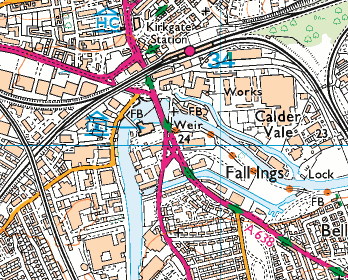
Just by the Hepworth a canal cut runs away from the river and the Hepworth is on the island made by that bit of the canal and the river. On the other side of the bridge from the car park there is a boat yard servicing the canal. I once watched a canal boat being lifted from a lorry, over the boat yard and into the water by the footbridge. You are now in the flat and marshy land east of the Pennines.
Shelley Village Hall is in a different sort of place. It is on a hill that is part of a river catchment area. On one side of the watershed a river runs down the valley towards Huddersfield and on the other the water runs down into the valley through Denby Dale. The river running to Huddersfield joins the Colne and Holme rivers and heads north east joining the Calder at Cooper Bridge. Meanwhile the River Dearne on the other side heads off to the Sculpture Park before shooting off south east to join the Rother going through Rotherham. Rivers seem to do odd things.
All the rivers mentioned so far are eventually headed towards the Humber and Hull. They are part of a much bigger catchment area. One part starts in the Hills above Settle, where rivers head across to Lancashire, up to Cumbria, over to Tyneside and, of course, down through Yorkshire. All those Dales and places like York that we like to visit have rivers that eventually end up in the same place.
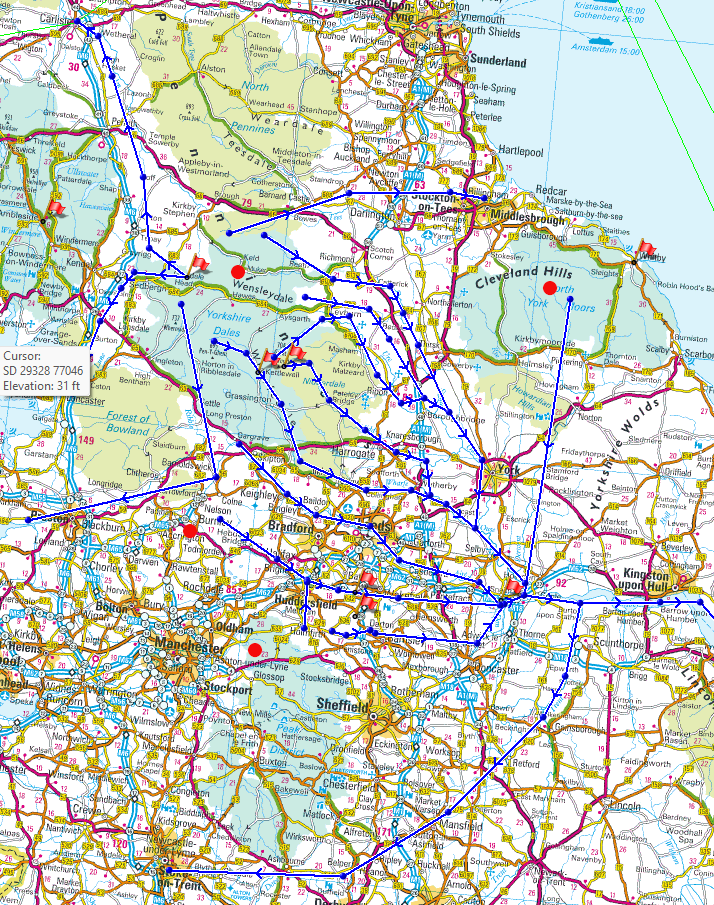
Perhaps more astonishingly is all the rivers, like the Dearne that eventually reach the Humber from a southerly direction. The Dearne joins others coming down from the south Pennines, including the Don before joining the Ouse on its way to the Humber. That wasn’t always true though. Until some amazing river engineering by a Dutch engineer the Don joined the most astonishing tributary of the Humber. This one originally flows through another place associated with the Arts – Stoke on Trent. Yes, a whole set of rivers on the other side of the Pennines meander around as the Trent heading southwards, then turning east and finally north, before joining up with the water from Shelley and heading to the sea.
So, as you sit sketching on your engineered island, think about the amazing geography of rivers and human attempts to control and use them. Your Shelley water flows down below our house in Ossett in both a canal and a river. Coal from pits under Thornhill was originally transported on the canal, before the railways were built in the same valley. Incidentally, the flood defenses built near the Hepworth lost a traditional foot route and Ruth is part of a group working with the Council, the Canal and Rivers Trust and Sustrans to get routes restored for pedestrians and wheelchairs and cyclists. Another set of connections in my fascination with what I’ve called Paths of Desire.