I’ve always been lucky enough to be able to develop skills. Those skills have drawn other people’s attention which is a mood boost but which can also put you under pressure.
I’ve taken the privilege of that attention seriously and watched others to help develop those skills further. I’ve never taken things for granted. I try to push boundaries on my abilities and widen the range of messages I can include in work. I also love to try to pass skills on to others. I learn from that as well. So here are some examples of development that I hope will encourage you to keep going.
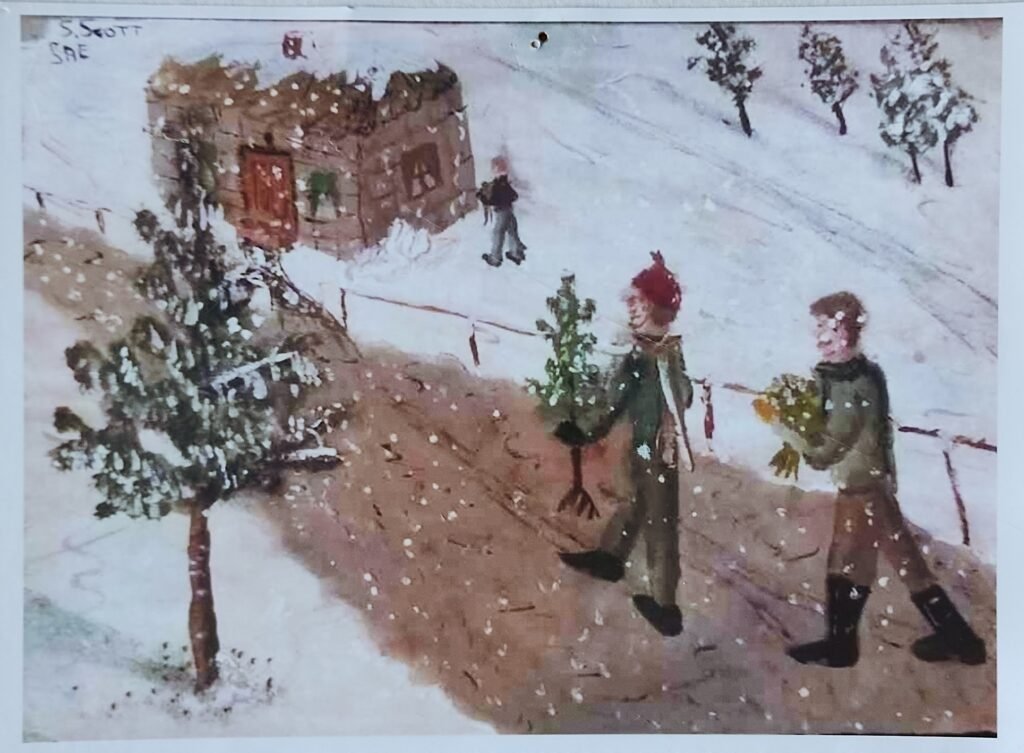
This was done in the mid 1960’s with gouache, which is not the easiest thing to paint with. I was a naive 15 year old with no experience of painting scenes, no real knowledge of art and I made the whole thing up without reference to any other images. Other people had more sophisticated painting and drawing skills than me but it wasn’t a bad painting. Apart from a Gandalf on someone’s window, I rarely painted people again until this next one.
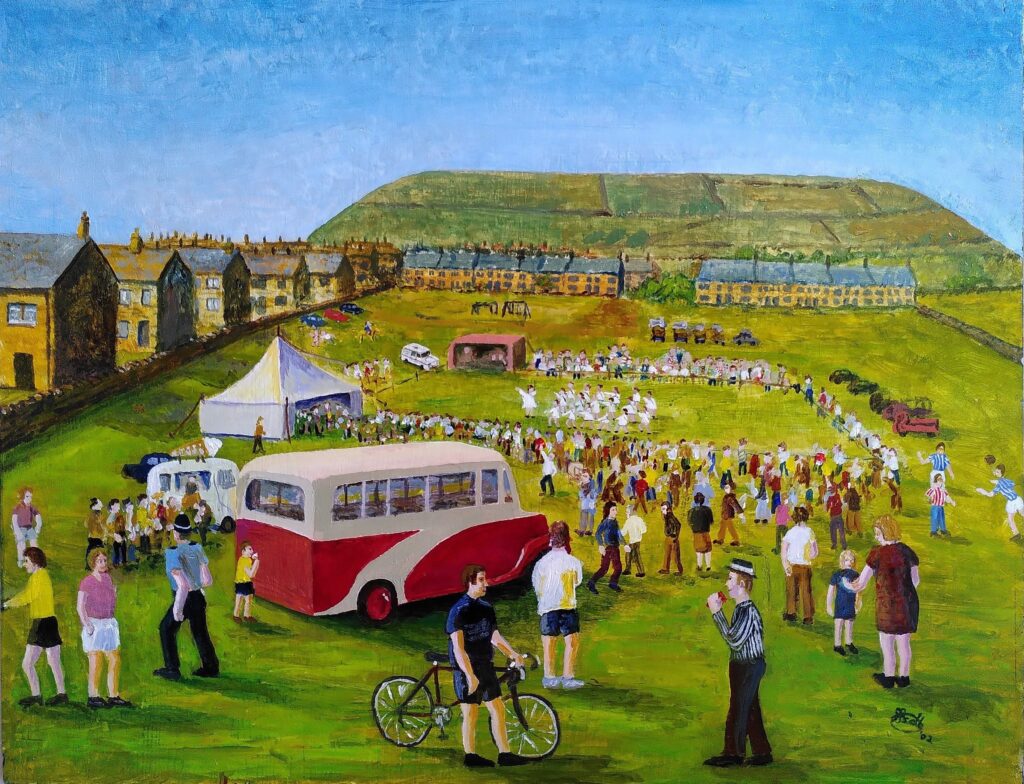
This was started in the 20th Century and finished in the 21st. People like it, despite its slight naivety. I knew the place and used some photos to remember things like the bus. The scene arrangement is completely made up as I painted it. Because it is in acrylic I was able to paint over and improve it over time.

This is a real place again and a real event and photos were used as guides. The details of the scene itself and the figure placements are completely imagined. By this time I was starting to be more able to make decisions about tonal and colour balances and levels of detail required. Acrylic paint allowed me to develop the scene steadily, starting from overall colour and light ideas and developing and building up layers, even removing bits that don’t work.
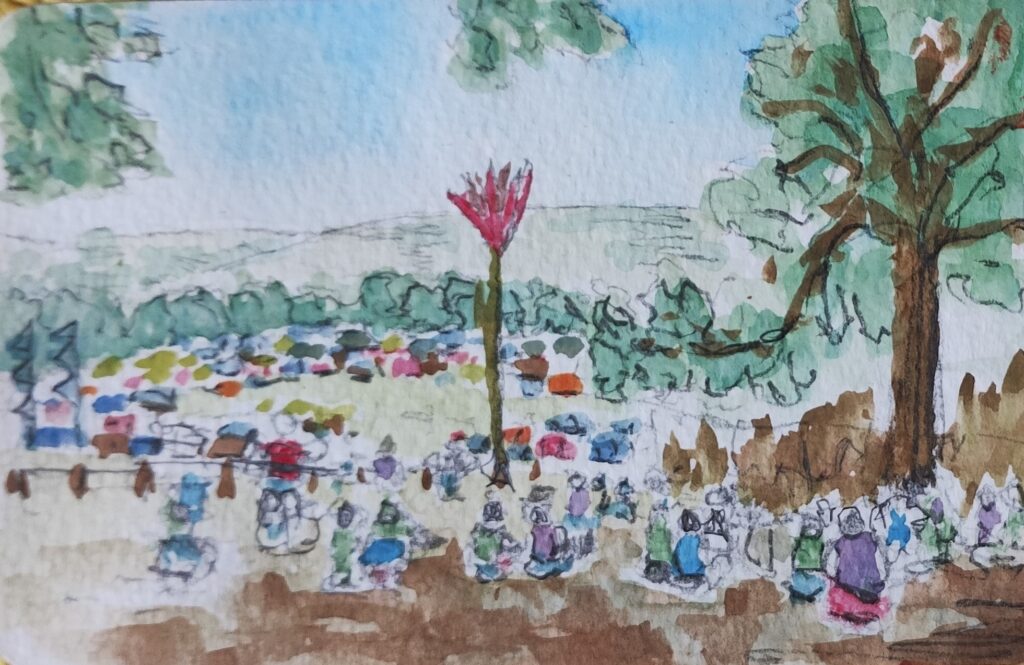
This is just a sketch from a music festival. This one manages to capture a scene without getting too trapped in detail. Watercolour usually forces you to make compromises to capture a rapidly changing scene. Freedom of expression is sometime too easily forgotten. My growing skill with the medium has given me that freedom. By this time the work on the more formal scenes and constant practice on site have given me a more relaxed level of control. Whether you are working from a scene in front of you or one built up from one or more photographs, the aim is to get to a point where you are building a painting rather than copying what is front of you.
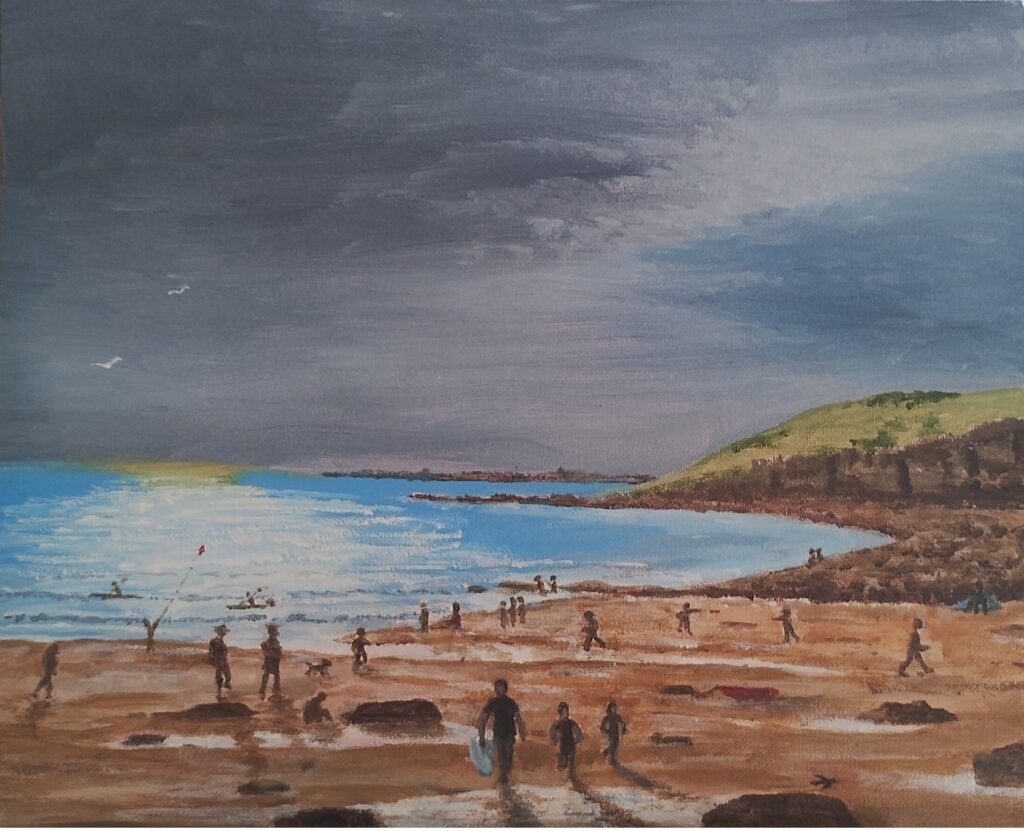
This a a more recent one and reflects some of my present day habits. I made a sketch on the spot and took some photographs. I made some mini sketches of what I wanted to include. The background cliffs are as near the original sketch as possible to capture the day and then the rest was added trying to capture the mood of the whole day, including packing up to go home. By the end of painting this I am no longer looking at other images, just at the painting and whether it is satisfying in itself. For complicated things like little figures I might try out brush sketches on a separate surface, like the paper covering my desk. This allows you to develop quicker and more effective brush strokes.
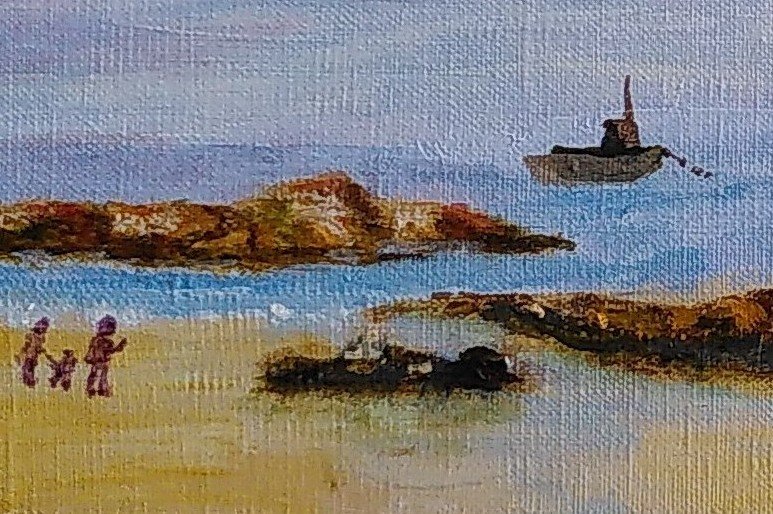
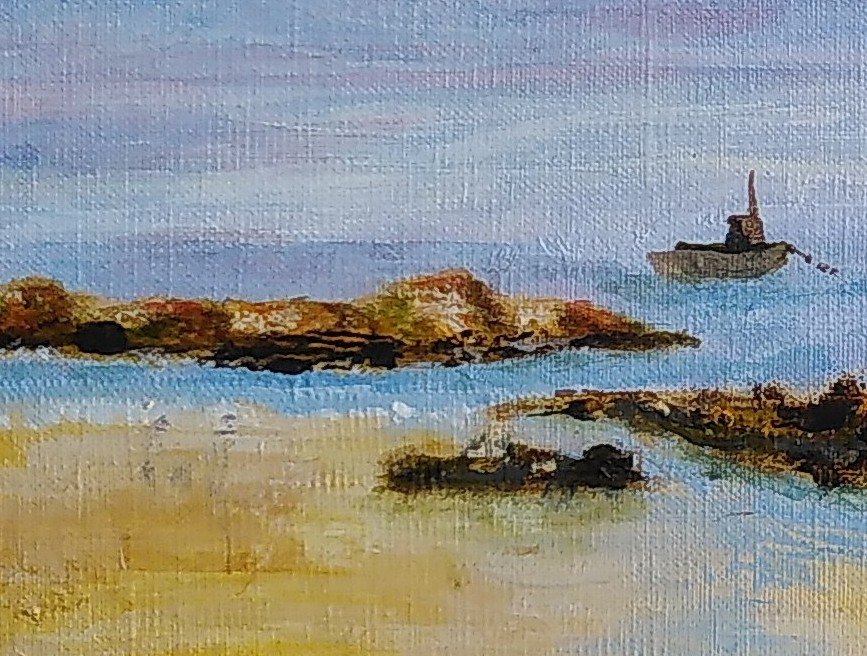
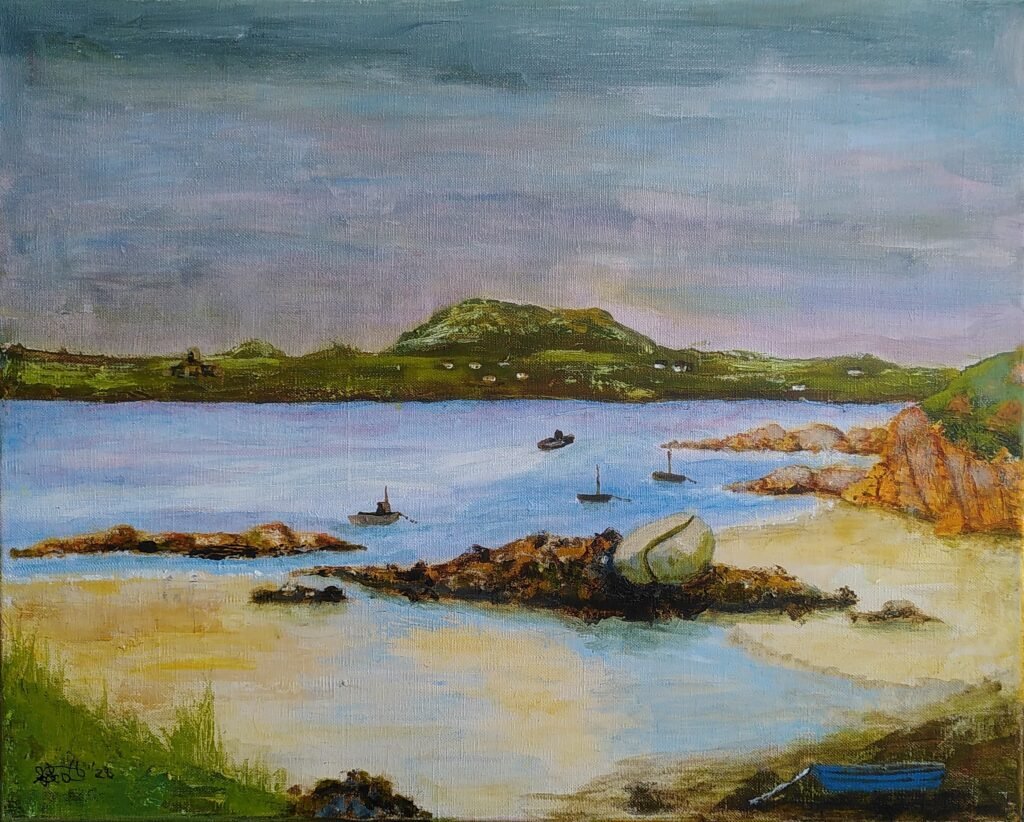
Those examples are all social scenes, which are particular difficult to capture. There is nothing ‘wrong’ with my first effort but I hope you can see that constant development allows me to have more choices and better control over what emerges. As the years have gone by I have managed to get less trapped in the picture or thought that I am working from and this allows me to have the creation of the new picture clearer in my mind. It allows me to stare at the picture and decide where it needs to improve and the best way to do it. Here is an example of a landscape. It is a second development from a sketch. The first development had a family group and a Highland cow on. I decided to do without the cow this time but quickly added the people in. Staring at it made me realise that they didn’t add anything worthwhile so I just painted them out.
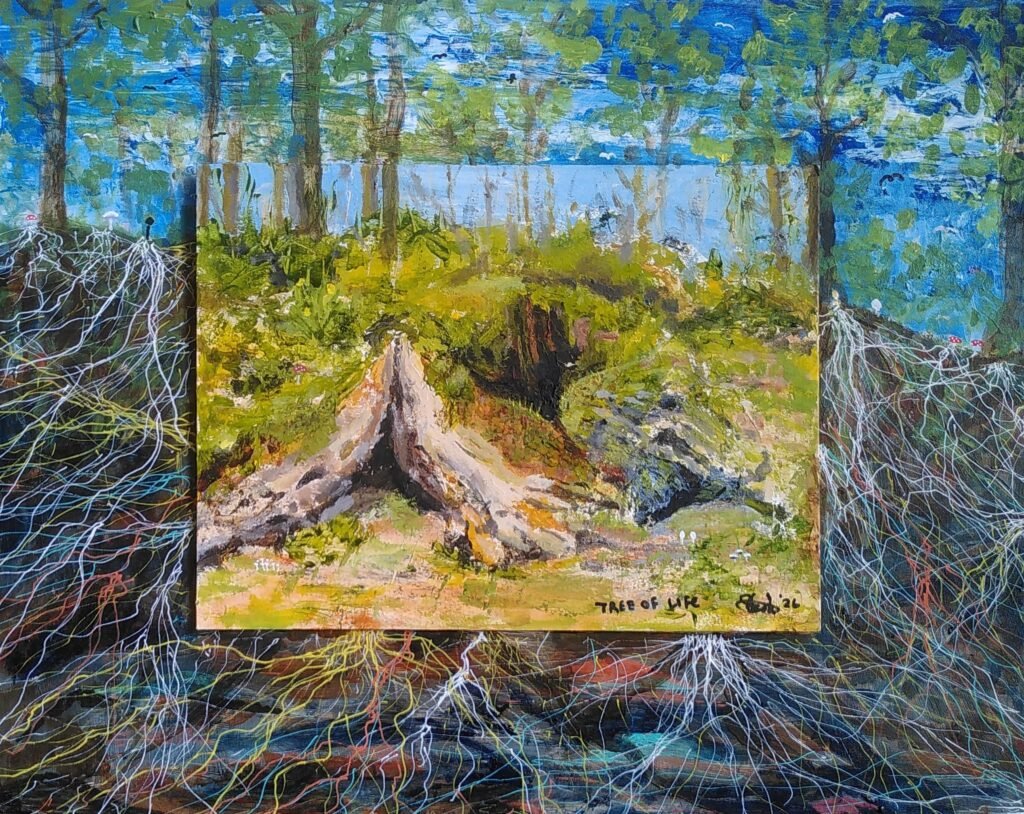
Below is a painting from a completely different ‘theme’, one that probably suits my own thoughts and way of working more readily, but all the same I could not have achieved it without applying lessons learned from others and the experiment and development that went before it.
I hope you will keep going and find ways of working that suit you.