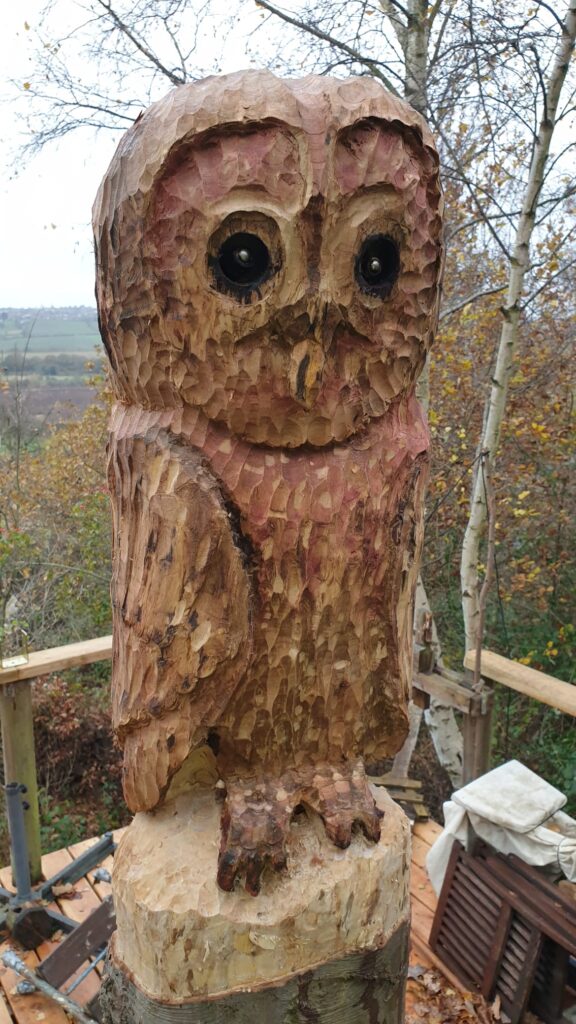
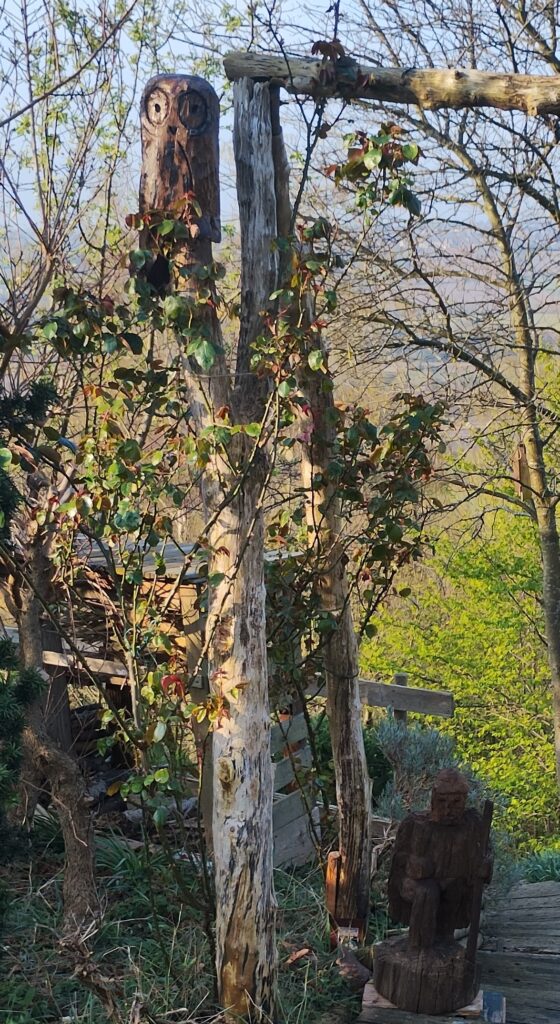
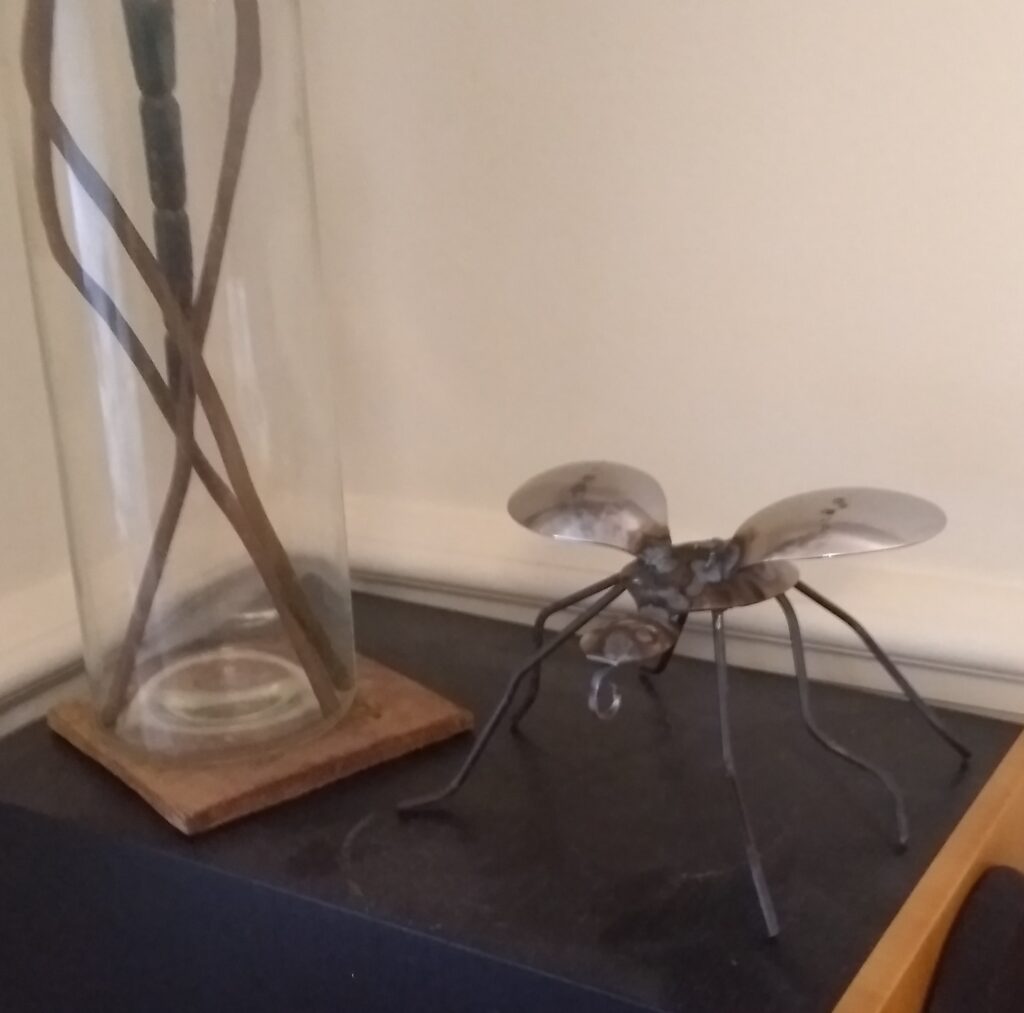
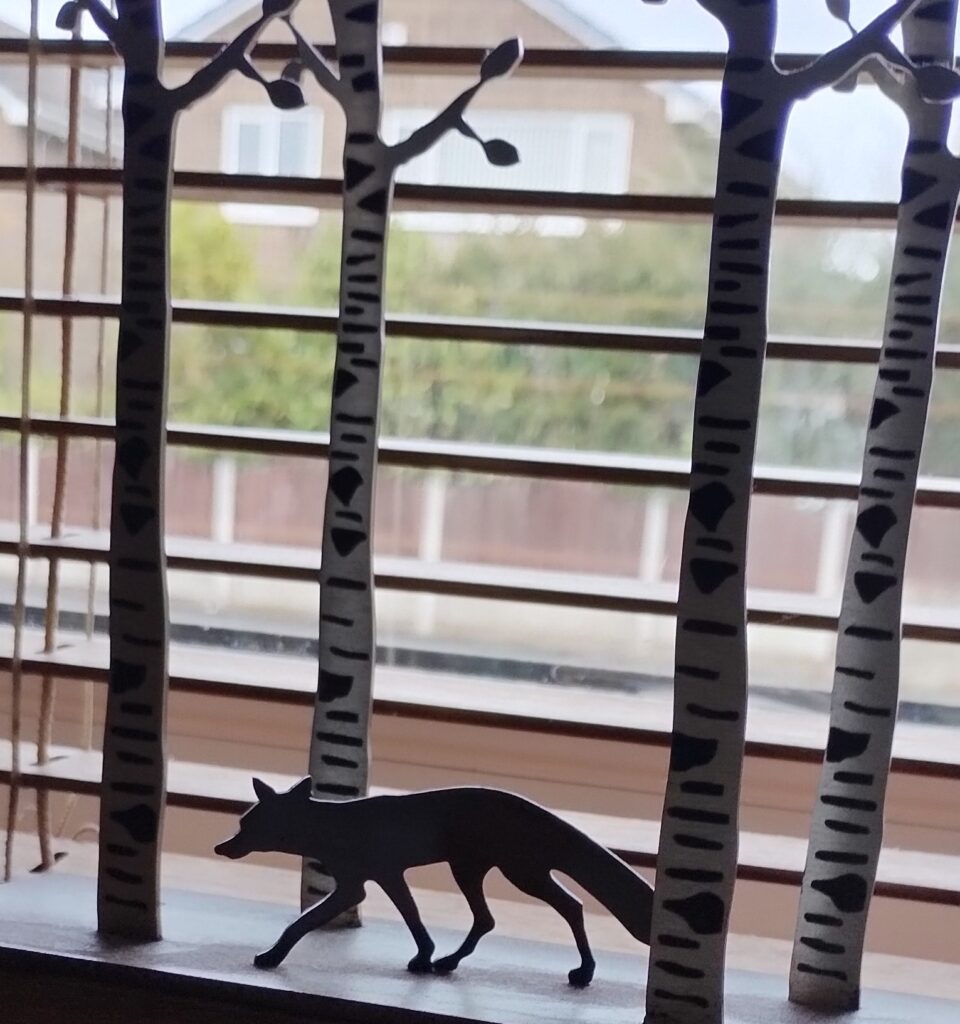
I’ve been to the Sculpture lounge before to make sculptures with Mick Kirkby Geddes and David Mayne but this last weekend highlighted just how good they are as guides through this creative process.
Four people with different levels of experience and all of us guided through the choices very capably and skilfully. On the second day I was having a particularly trying day and making mistakes. Even though I don’t usually require large amounts of help, their joint radar was working all the time and gentle advice would appear at the right time.
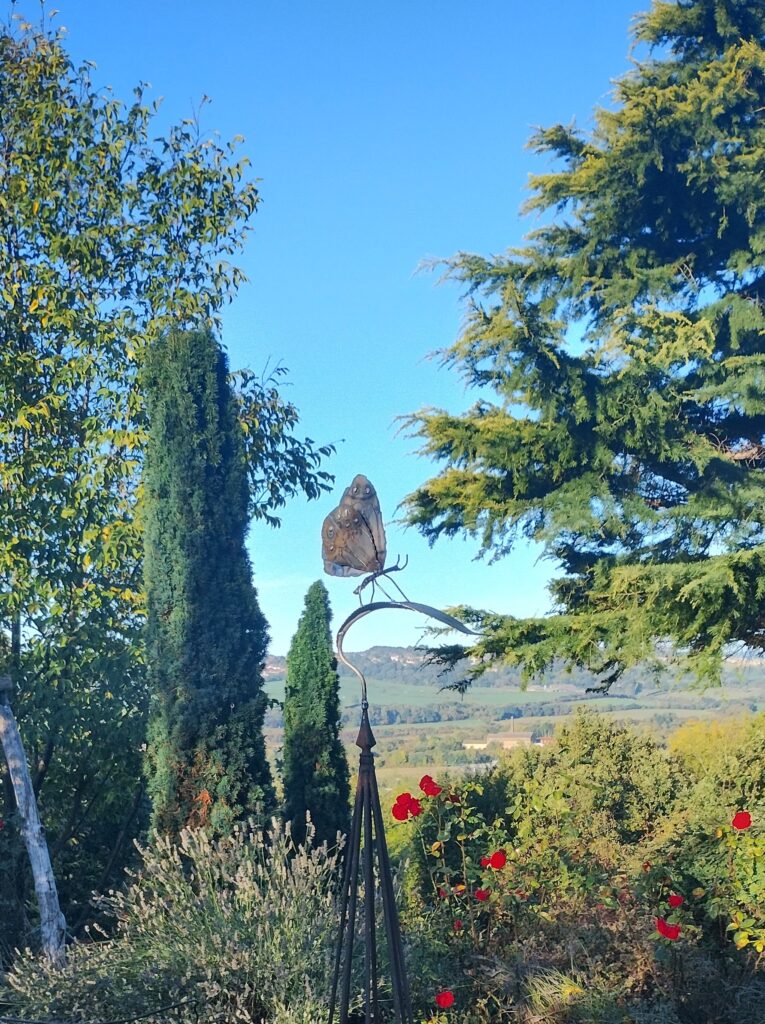
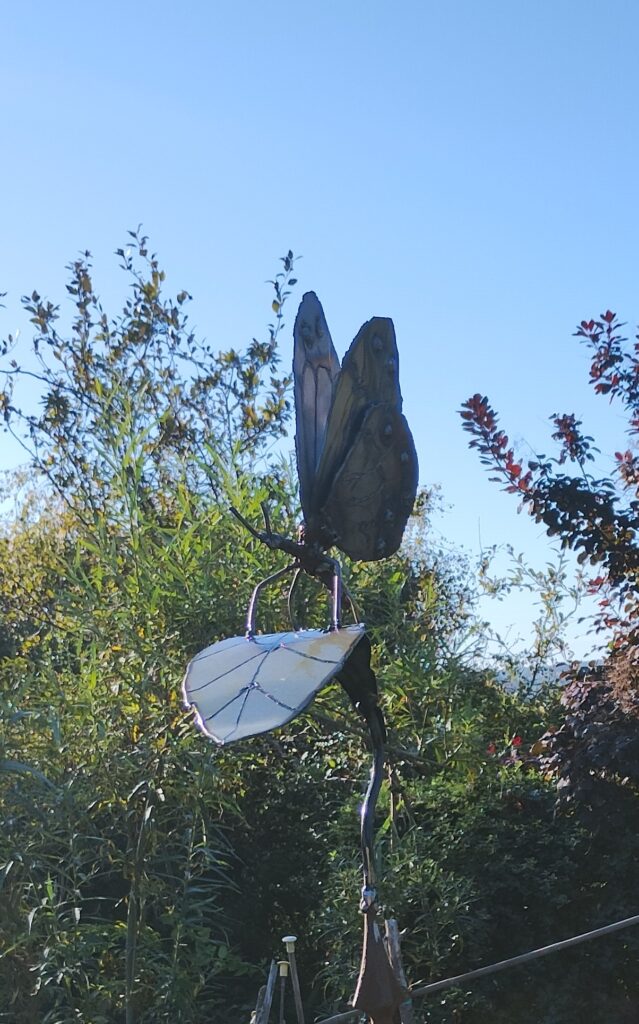
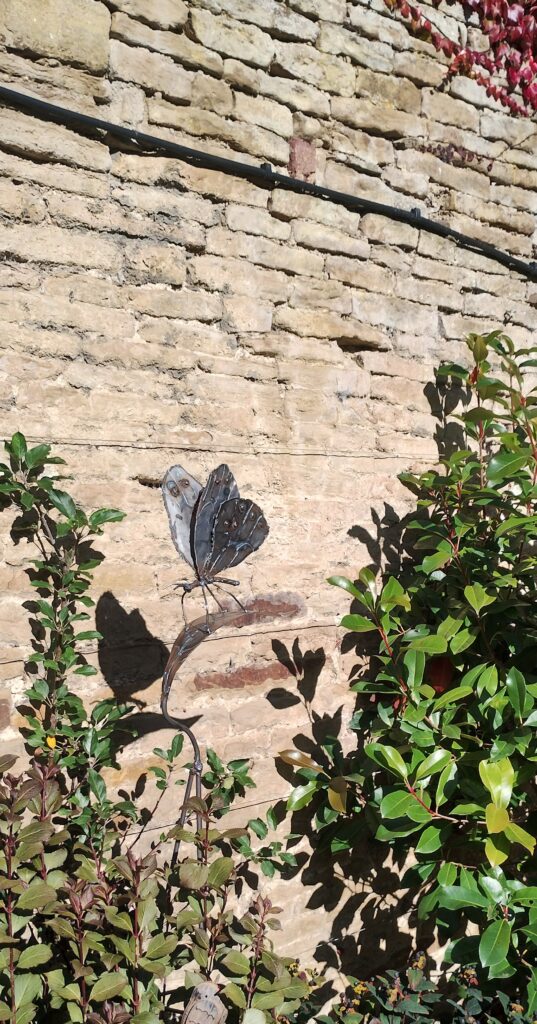
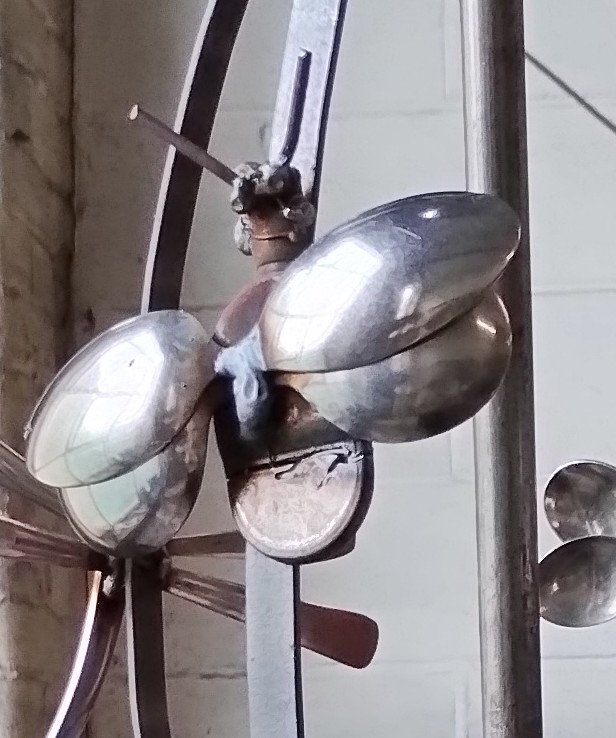
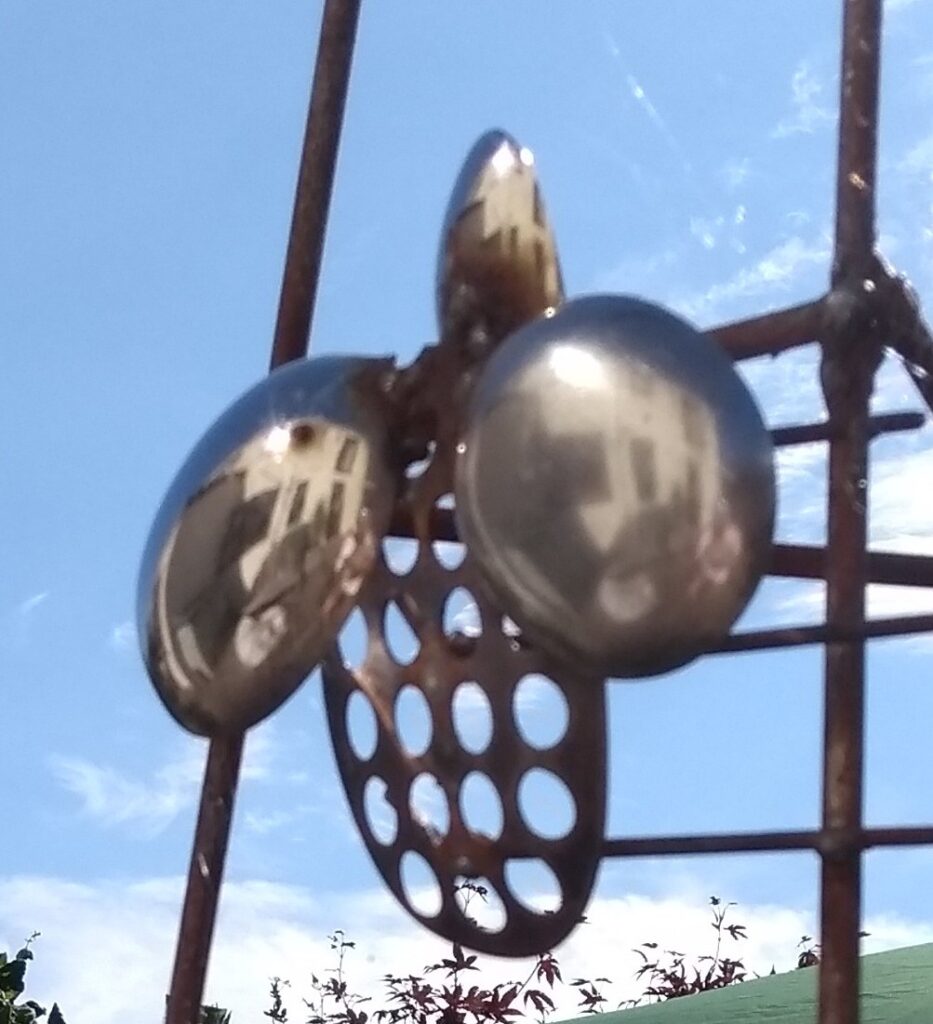
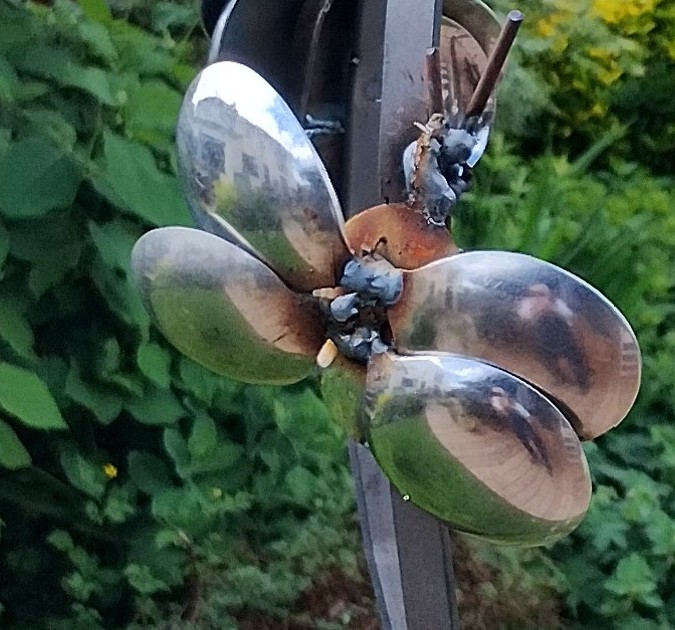
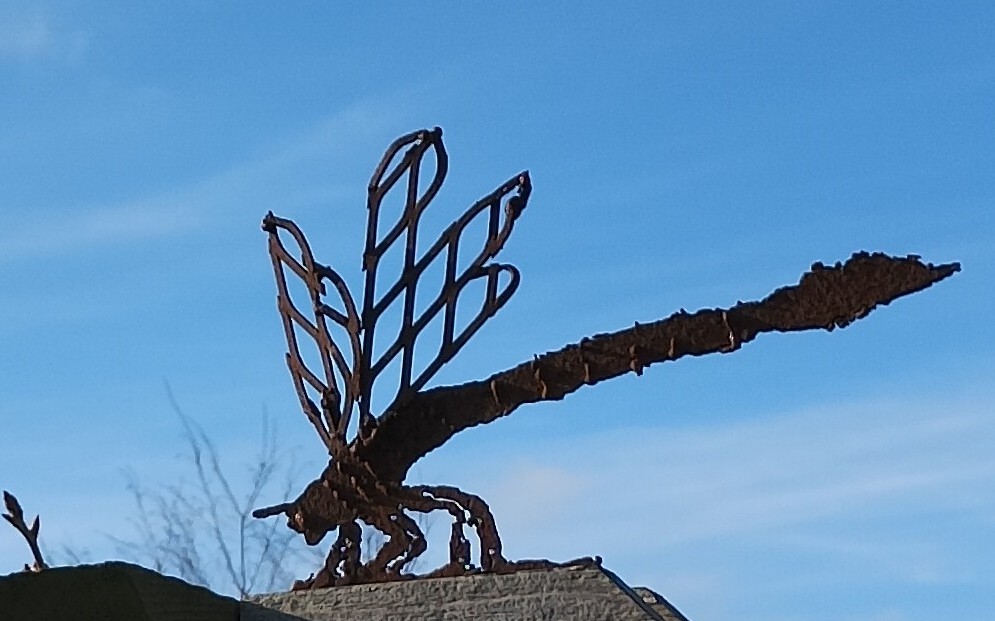
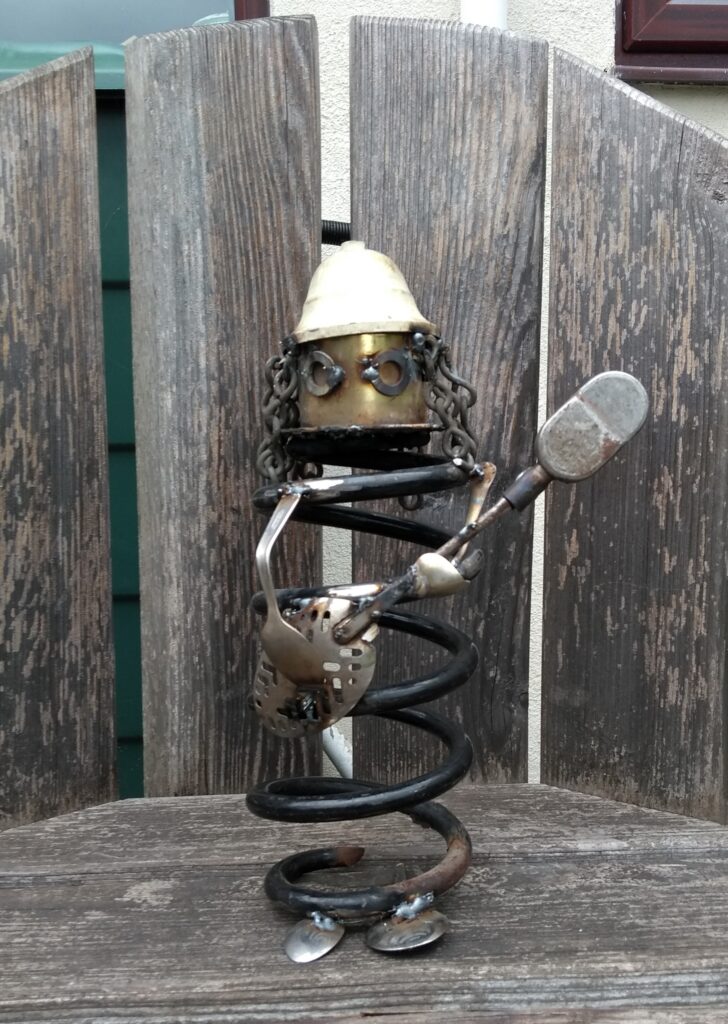
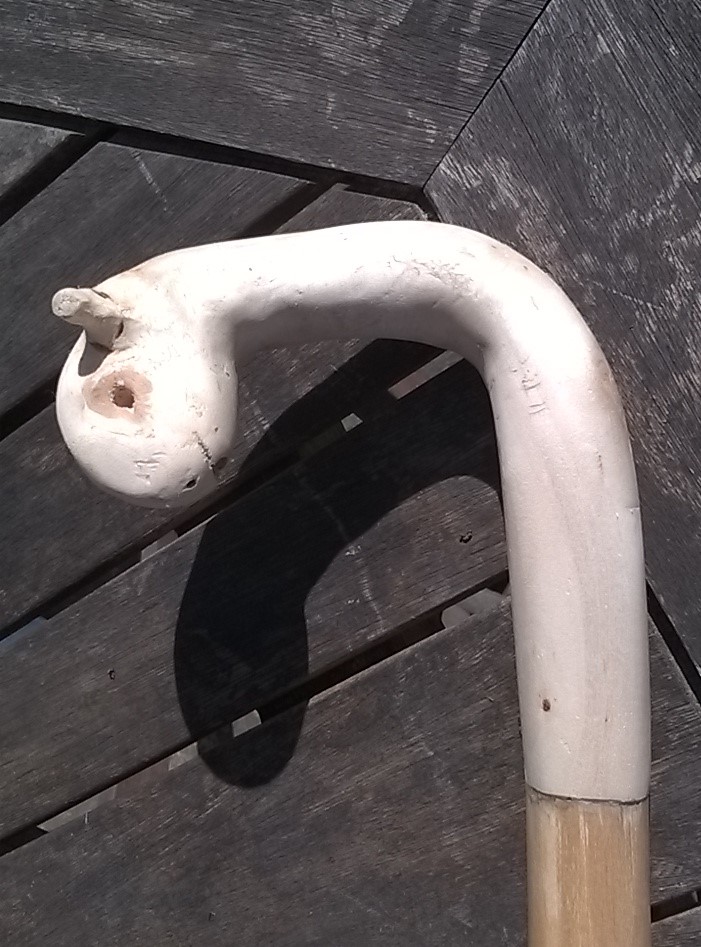
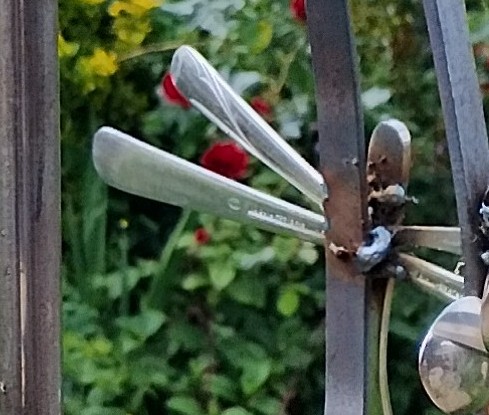
I was making a design change to a previous mobile piece, then moving on to a butterfly on a garden obelisk for a friend. Both of these went well and were finished by the end of the first day. Ruth loved the butterfly and asked for on to go on top of one of our obelisks. Next day I got busy, but was tired and kept making mistakes. Cue David and Mick spotting my slips and digging me out of them.
The one above and immediately below is the one in our garden. I’ve added a transparent layer of green oil paint to the leaf since I first put it up, to tone it down a bit in bright light.
All my life I have admired people who can make marks on paper that capture your imagination in some way. I watched carefully and tried to work out how it was done. That has widened to include other forms of design, like furniture, pottery, sculpture, fabric design, even knitting. I’ve never stopped trying to learn and develop.
All these activities mean acquiring skills but also learning what are essentially tricks. I’ve often told people about my dad saying ‘let the saw do the work’ and it taking me another 20 years to realise what he meant (don’t over work it, establish a smooth rhythm). If you know the trick, then the skill often becomes easier to achieve. About 45 years after my dad first said that, someone watching me make stage sets remarked on the sheer speed of my sawing and I gave a little inward smile.
Last week I mentioned to Shelley Art Group the old watercolour sky trick. Skies often have deeper colour at the top of your view than at the bottom. If you are using watercolour the liquid tends to run downwards, taking the pigment with it. If you are painting on the flat, then it tends to run to any low areas, often the edges or centre of the area you are painting. If you are painting a sky, then turning the paper upside down makes the pigment run to the top of the sky. which is usually what you want. If it is a blue sky with white clouds you can dab the clouds out using an edge of cloth or tissue.
Knowing the trick doesn’t guarantee a result but it usually means that you are not working against the materials. This in turn allows you to concentrate on developing the skills to make the best use of that trick. As with my sawing, you suddenly develop more freedom and control in what you are doing. In watercolour that often means that you can use wetter applications of paint that flow, rather than drawing and colouring in.
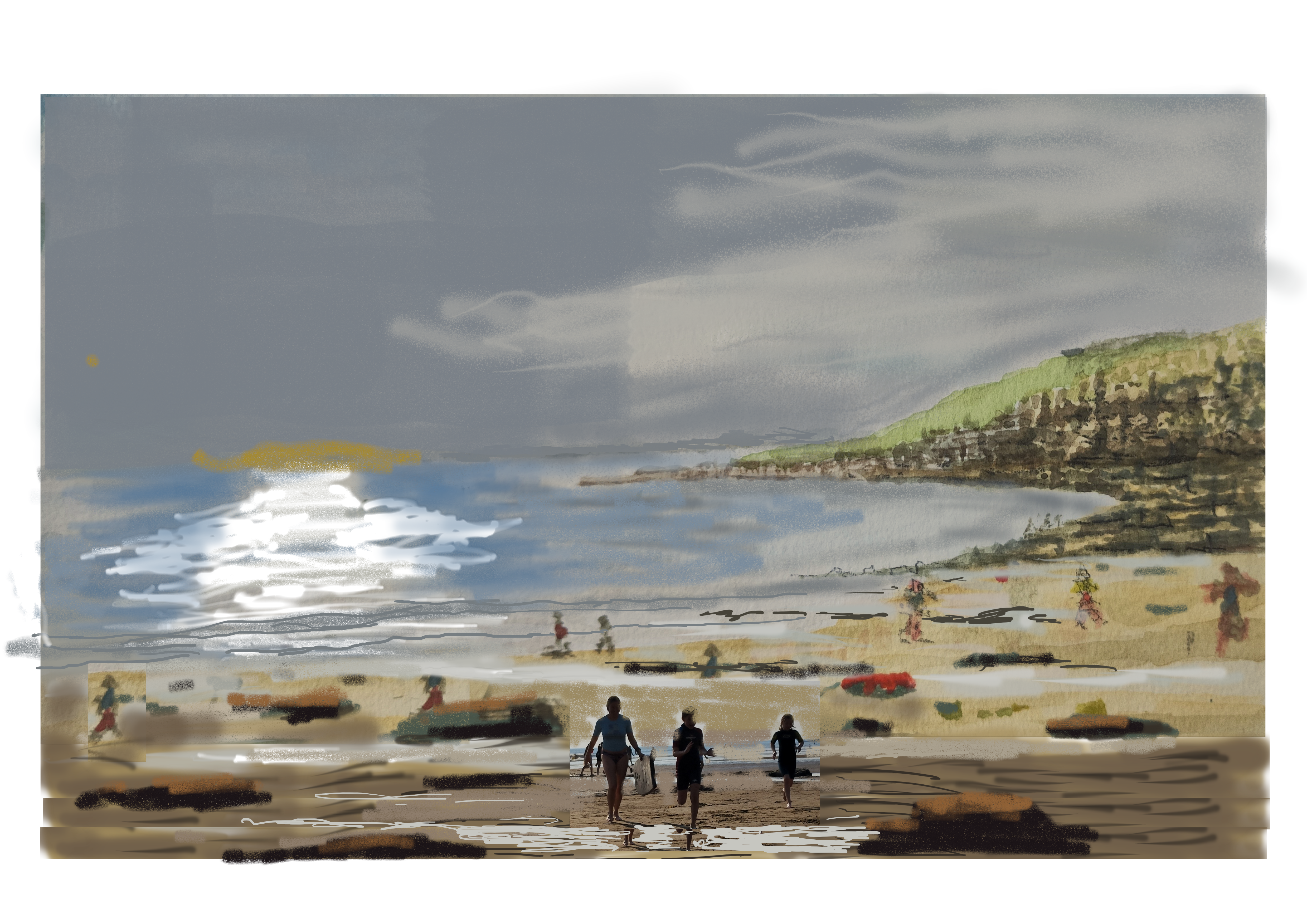
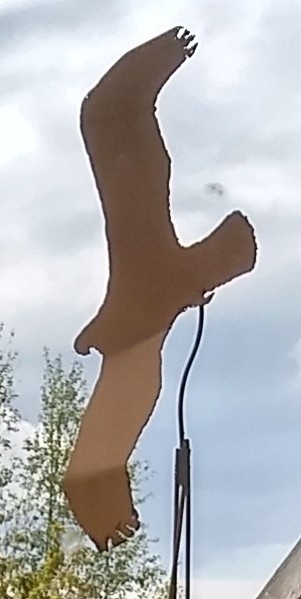
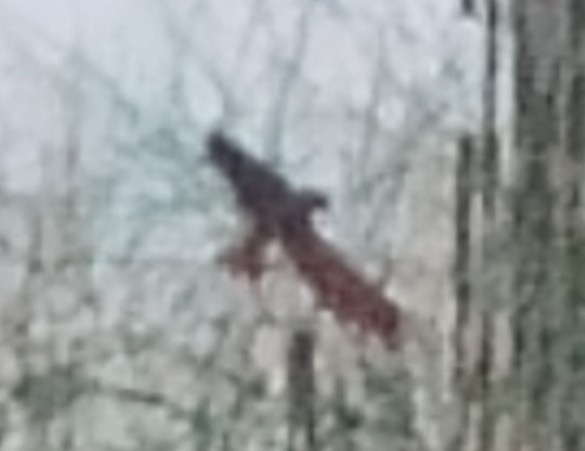
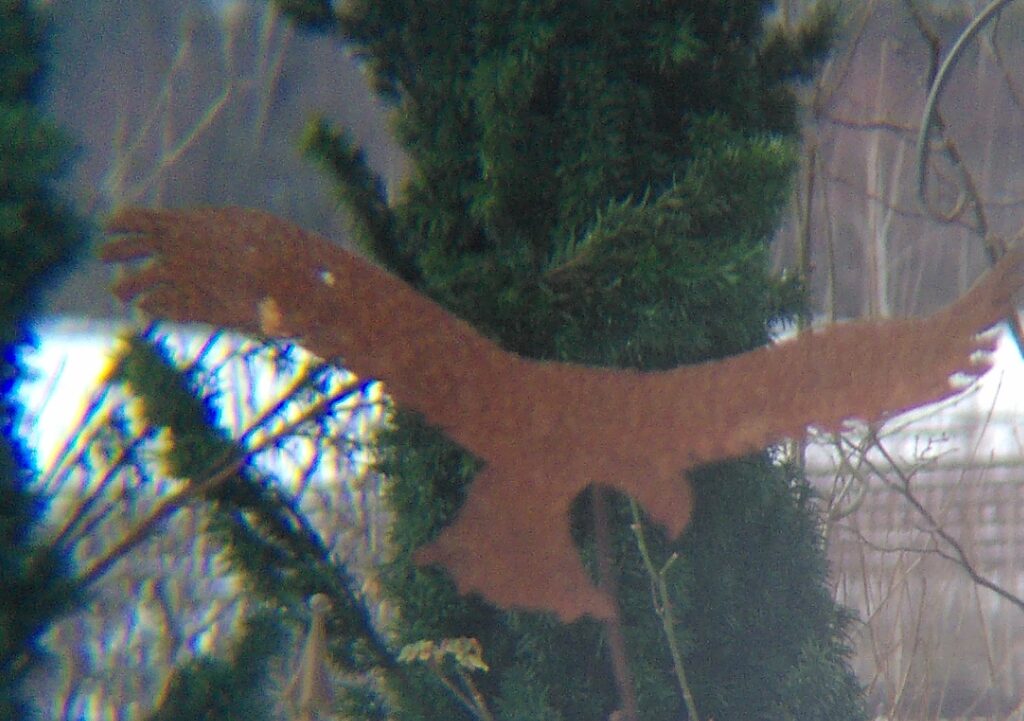
In one group of people I painted with, one of them had been an art teacher and went to the Slade Art School. I watched him working on a scene with figures. This is a hard thing to do if you are composing the picture youself. He did the background and then sketched the figures on separate pieces of paper and cut them out. He moved them about the painting till he was satisfied, changing figure size if necessary, then marked them in place and set to painting. I’ve never forgotten that trick and I now use it in digital sketches for painted works. The painting at the top of this piece is one I was asked for, of a kestrel sculpture I made that is down in Bristol. I had a couple of photos and I played with layouts, using a mixture of bits cut from photos, that I resized in Gimp and moved about and changed the angles of in Art Rage with digital paint for the sky. When I was happy with it, I painted the sky on the board/canvass first, using a mixture of palette knife and brush, then added the house roofs (palette knife). Finally I cut out the kestrel, moved it about, changed size and shape slightly again then marked it in place and painted it on. I moved the rod, that holds it up and allows it to be seen from different angles as well as possible, so that it was there but worked best with this painting angle.
One of the simplest tricks people often forget about is to keep standing back to look at what you are doing from further away. Find some way of standing it up and look from the other side of the room. Do it often. If you are making a sculptural object, put it somewhere that you can walk round it and peer at it from different angles. You don’t have to develop a skill for this one, just remember the trick. If you are working digitally keep zooming out to get the same effect. Because I tend to work flat nowadays because of slight tremors, I often have a simple lightweight stand to put the picture on to look at. Incidently working on a flat surface and standing above it also means you spend less time with your nose next to the surface too.
I’m Steve and I’ve been trying to make art/craft in all forms since I was little. Alongside various sport, it has been a constant in a much changing life. I have painted, drawn, used most printing techniques, sculpted, made posters, drawn cartoons, made furniture, designed made and painted stage sets, painted murals, landscaped gardens, made animated images and who knows what else. I keep trying and sometimes I am more pleased than others with what I’ve produced by the time I get to the point where I am just going to make it worse.
Alongside that I have also been involved with computers since the 1960’s. I have always been the person who can be given the most technical problem to solve but I was very pleased when someone said of me that I was also the person who could talk to any person at any level of an organisation and explain how things worked and how to use them best.
When home computers came along, I bought one to explore and to get my children used to them. I wrote and amended graphic computer games for them. Being a cruel person, I made them do arithmetic tests scaled to their age to get into the games. All the neighbourhood kids came round.
In 2003/4 Wayne and I went to New Zealand and walked the Milford Track. Each day I walked of ahead and then picked a spot and sat and sketched. People came along and looked at what I’d done and chatted. I’d been playing with my own website for years and after the walk I put all the sketches up there and everyone, from all over the world, who’d done the walk knew where they were and could look at them and remember the spots.
About 10 years ago Ruth bought me a Microsoft Surface, which is an iPad rival. I experimented with it but realised that other tools were often better suited to what I wanted to do. I did take it along to my eldest daughter’s birthday party to play with and ended up surrounded by kids and I gave each of them a new painting to work on in turn. Afterwards I put them all up on Facebook and they were shared around all over again. This year I put a new web page on my current website called The Fridge Door and I put those party images up there alongside all the images of kids’ art I had collected over the years. Cue a lot of sharing and relatives and friends being entertained once again.
Using computers I have put images on T-shirts, sent images to other parts of the world, put scenes on table and cup mats, sketched out designs, helped people get messages across by simplifying them into cartoon like images.
Today’s session should help you further along your journey to explore what a computer and a few apps cane do to add to your creative fun.
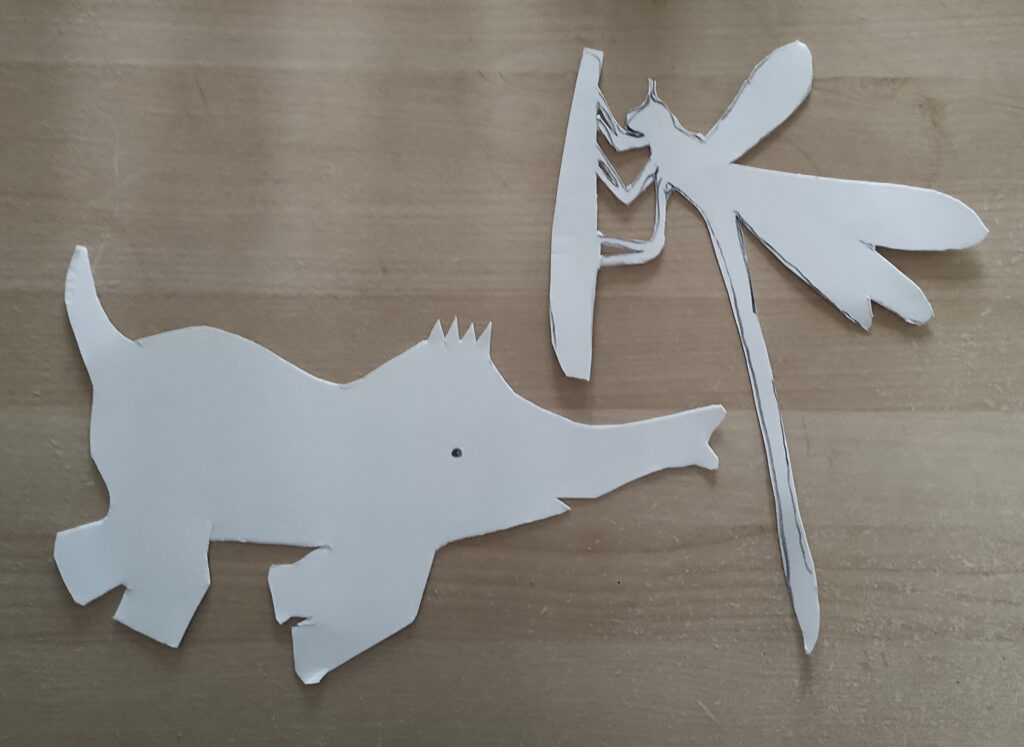
Dedicated to the dreamer/doers such as David Mayne, Mick Kirkby Geddes and Helaina Sharpley. This post was also inspired by my sister-in-law Jo asking me to do a painting of one of my sculptures. It has a free idea for any of the above artists to use.
About 67 years ago when I was around 7, I was wandering through the hectic school playground and one lad was sat on the hard ground, next to the wall with railings on the top, sketching a Cowboys and Indians scene. I never quite understood the fascination with the topic but the picture of the sense of movement and activity has stayed with me ever since. I now realise that I’ve been trying to capture some of that all my life. All those attempts over all those years have only ever felt partially successful but I keep trying. Other people have more attention to detail, a better inner vision and less shaky hands. I do often look back and think that something is better than I originally thought and people often say they like what I’ve produced. I try hard to ignore the look of those just don’t get it or see only the rough edges.
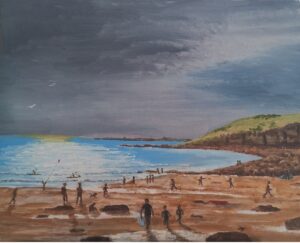
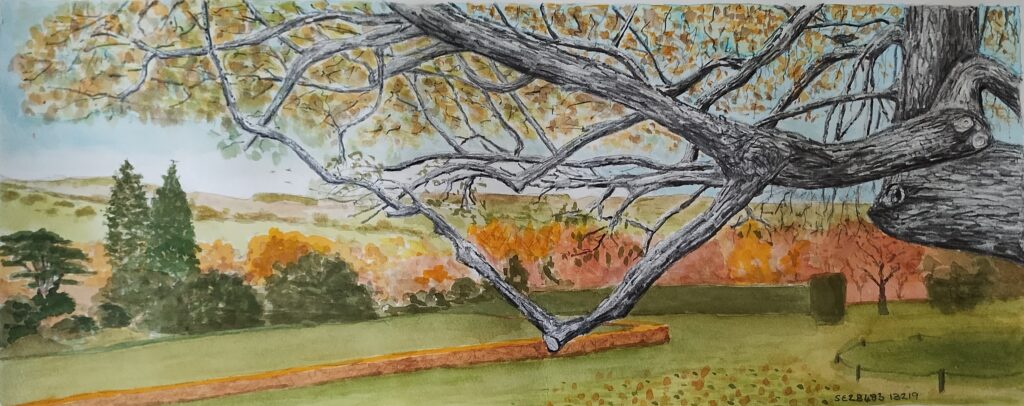
This is a recent painting of mine. I hope you can see the similarity to what I’ve described.
This is a sculpture I did first for our garden. This one, that Jo wants me to paint, is down in their garden in Bristol.
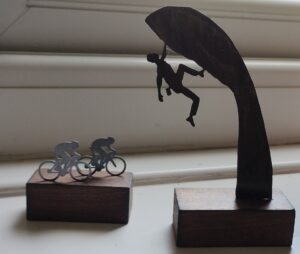
It was as I thought about how best to capture it in a painting that the clarity of the sketch/movement theme came to mind. Added to that is light. Below are a couple of David Mayne’s sculptures, which we have instinctively put against the light. Excuse the cobwebs. David plays with both light and movement.
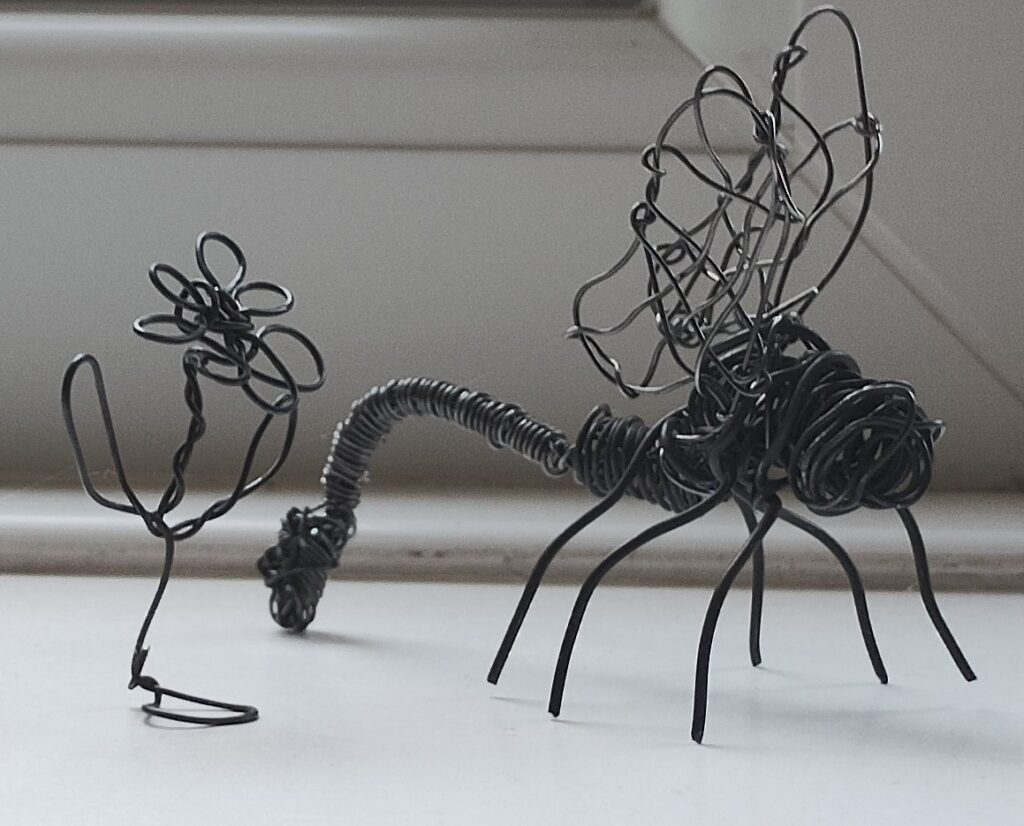
Helaina describes her sculpture as drawing with wire and she attempts to capture the everyday using just wire. She also plays with light by putting the result in a white box. A theme of Helaina’s is also the delight in the everyday. I’ll let you look at here website but here are some that I did at a workshop she ran.
I hope you are picking up the threads here. My paintings have also been likened to Stanley Spencer and Lowry. Not in quality I hasten to add.
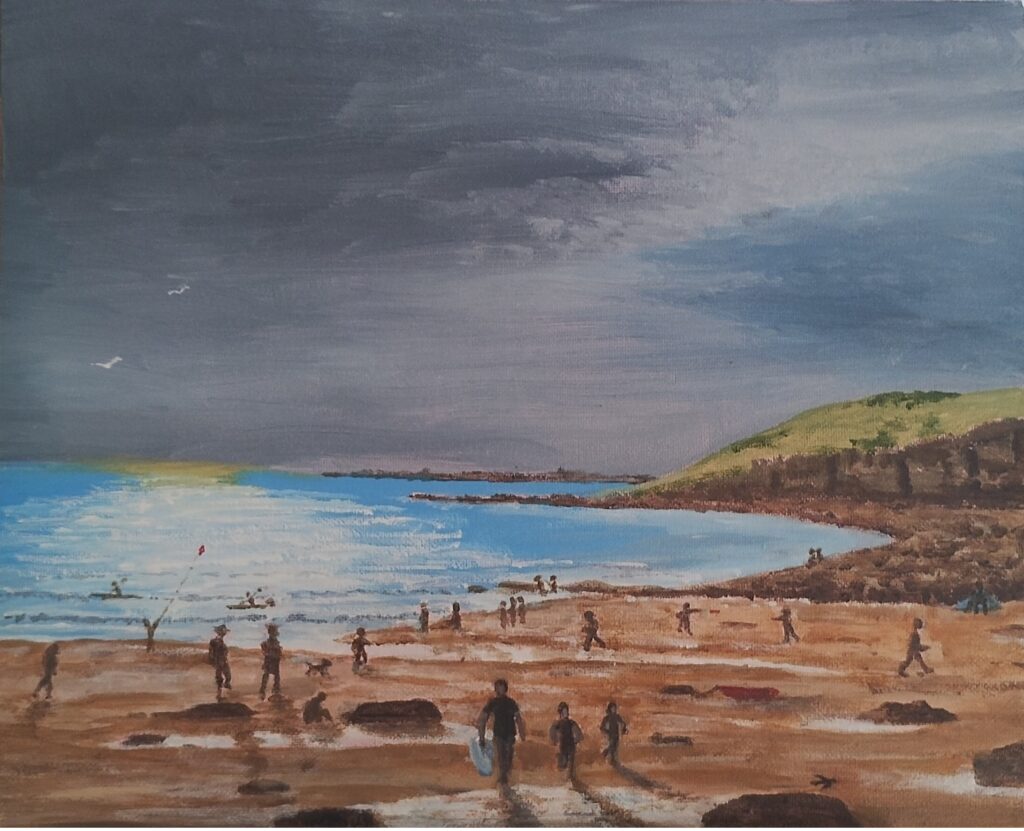
So what is the idea? Well the kite sculpture is against a sunset, as is the Dunraven painting. I recently did one of Morris dancers dancing up the dawn as well. So I’ll go back to trying to work out how best to paint the kite and I leave it for David and Helaina. or anyone else, to produce moving, living sculptures of the everyday by backlighting them with a subtle sky line and light. If you can capture for me skylarks and their noise as you walk across the moors then even better.
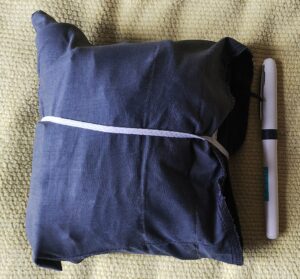
I have been aware of digital art most of my adult life, i.e. since the early 70’s. I’ve made static images, animations, games, manipulated videos and sound. The tools that are available now are astonishing. That said, alongside a phone to quickly capture some aspects of a scene, below is what I use mostly when sketching:
It has in it mechanical pencils with soft drawing leads, short very soft pencils, a mini paint box, water filled brushes, rags, two tiny sketchbooks…… It also isn’t affected by awkward light reflections and doesn’t run out of power. The image below is in that bundle still.
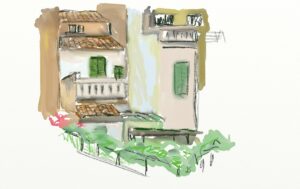
On my Android phone I have a copy of Art Rage, which works on all the main computers. This one used just my finger as a pointer/pen/pencil. Waiting for a tram in Soler on Mallorca, I could draw this quickly without getting out and balancing, pad,water, paints and pencils.
The first thing to remember about digital art packages is that media rules don’t apply. While you can appear to be painting with oil and a stiff brush, you are just applying dots of colour. If you use a pencil effect, you can expand the the size of the lead to huge proportions, add colour and get that grainy effect of a soft pencil on grainy paper over whatever area you want. You can change the settings of the tool, for instance to make the pencil or charcoal softer or more grainy. If the tool doesn’t give you the effect you want try another one. This lack of rules applies whatever the App you are using.
While you are just applying dots when you work, the apps and devices are very sophisticated nowadays and can often detect pressure and speed to recognise gestures. In this way they try to reproduce what you would get when using a brush, pencil or other tool on paper or canvass. To get the best out of this, the ‘pen’ device and App may need to match. Procreate on Apple is matched to the Apple Pencil and even different models are better matched than others. Don’t forget my finger drawing though.
The final thing I’ll say for the moment is that there are three tools on all Apps that you can use. First, Undo, which usually allows you to go back several times to pretend you didn’t just do what you did. Second a variable size Eraser that will magically rub out paint too. Third is the ability to change the Settings for each tool, for instance to add more thinners or paint. There is also the opportunity to save what you have done so far and start adding to it in another version (left swipe the file on Apple).
I’ll keep adding to this post with more detail later. See below.
Good luck.
What are you trying to draw/paint?
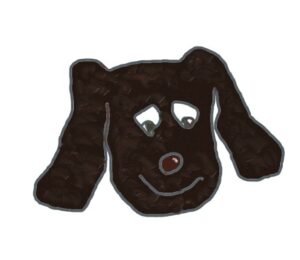
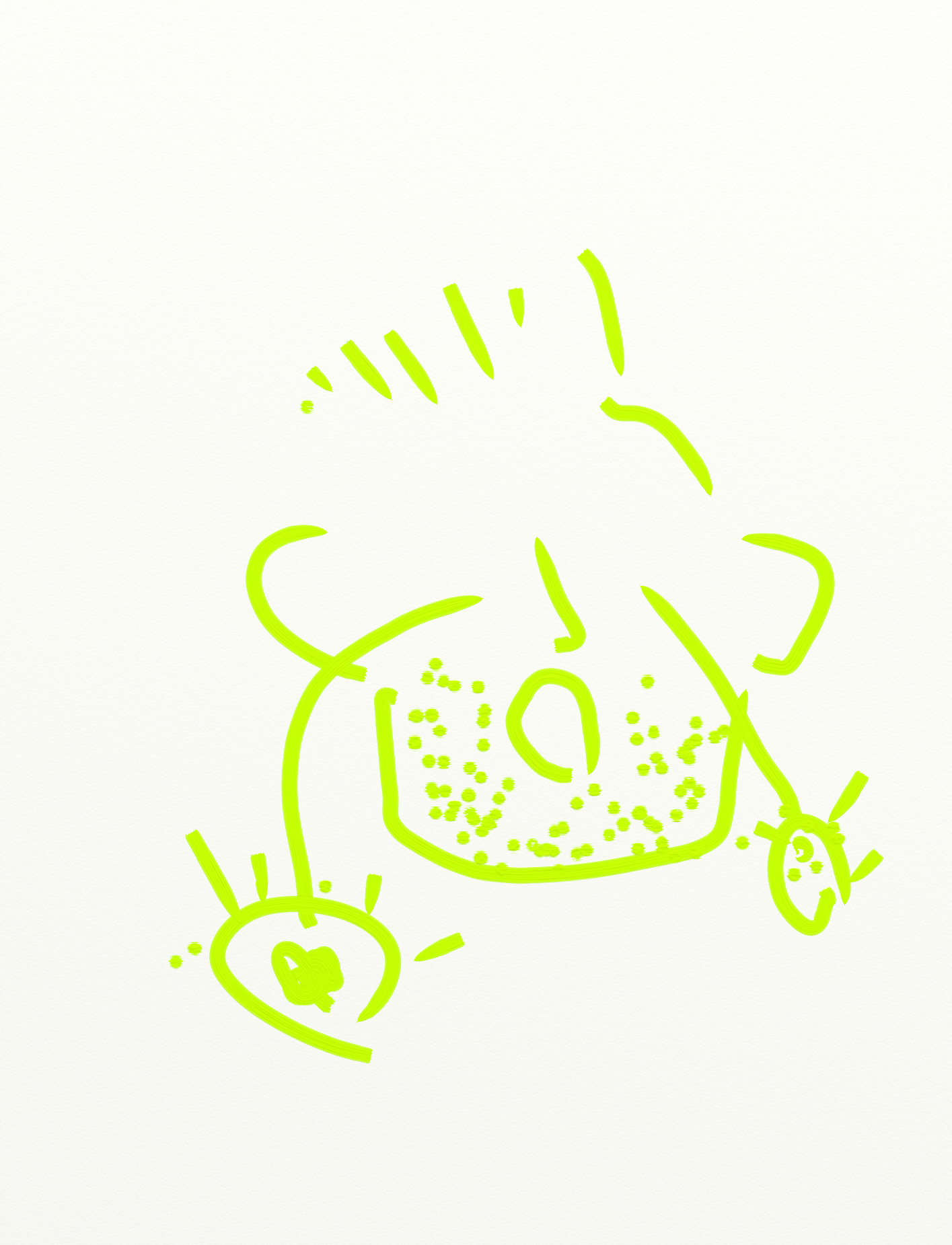
Here are a couple of finger doodles on the phone:
These were done very quickly to send via WhatsApp. The second one was during a FaceTime with Ruth’s grandchildren, when they were laughing at my eyes popping out. I sometimes play ‘swap the doodle’ with my grandchildren or send quick visual jokes and birthday wishes to them. The digital art apps are great for that but if you are thinking of a digital version of a paper image then it gets a little more complicated. As with any medium, it is easier if you create images that fit with the medium. All we need to know for the moment is that it helps to have an idea of what you are aiming for. If you are aiming for a particular size of printed image, then try to start with an image of that size.
Cutting and Pasting
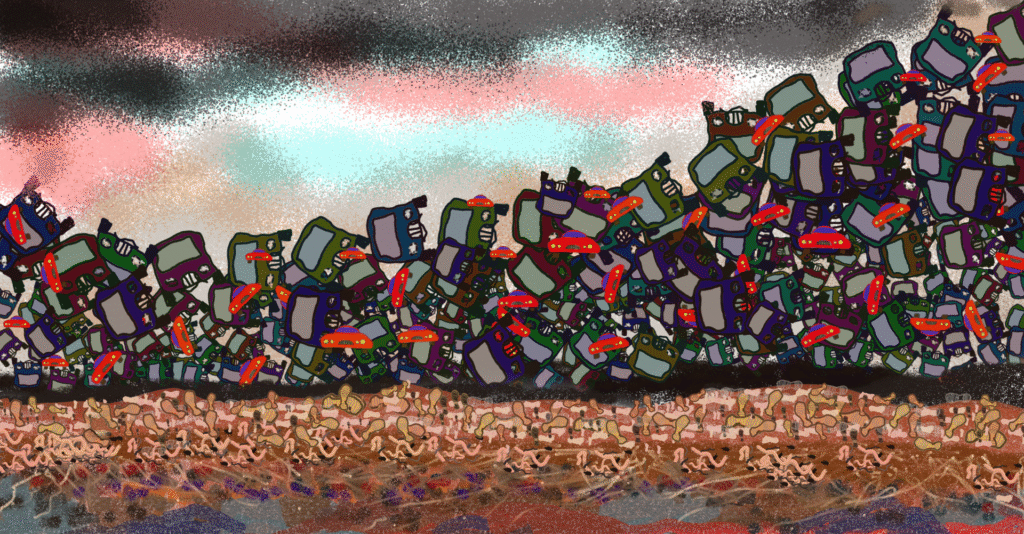
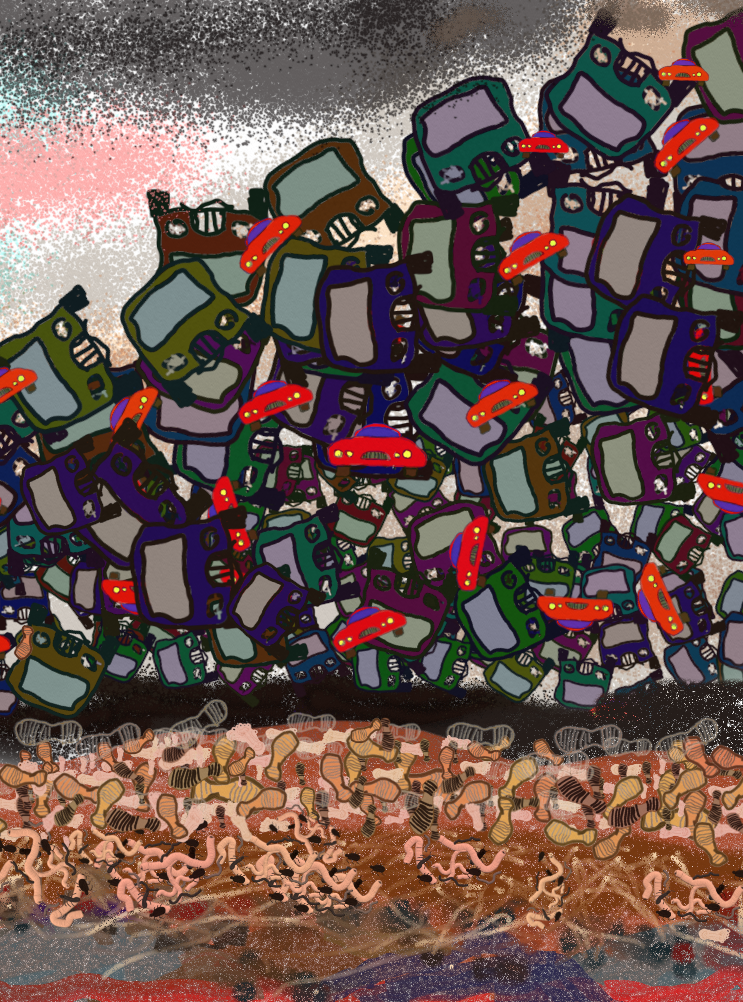
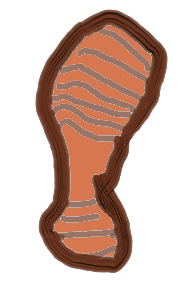
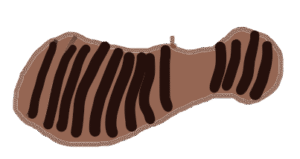
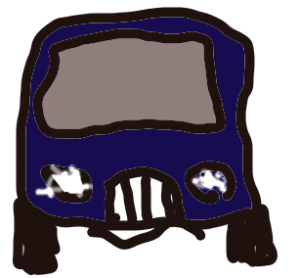
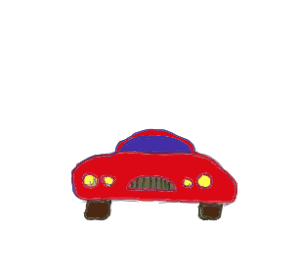
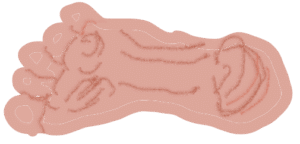
I am now going to half contradict that statement above and introduce another tool. The image below is one I was working on, using techniques I had never used before, which are much akin to collage. It served to reassure me that I was getting somewhere but I didn’t like the colours of the feet at the bottom and the cars needed more variety. So I made a new copy of the image and started altering it. I simply rubbed out the feet and started again, having worked out better ways of doing that bit of it.
The result was this one:
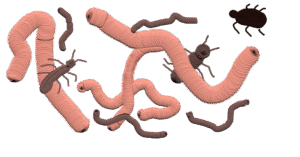
You can see that the feet are completely different, I’ve added soil and subsoil layer and also creatures. There is extra colour and variation in the cars too. At this point I realised I had made the wrong shape decision at the start, so I was able to set up a new blank canvas and select a portion of the old one and copy it in.
I was much happier with that, so I added a few subtle changes and settled on the finished image (for now…). So don’t give up.
Importing an Image
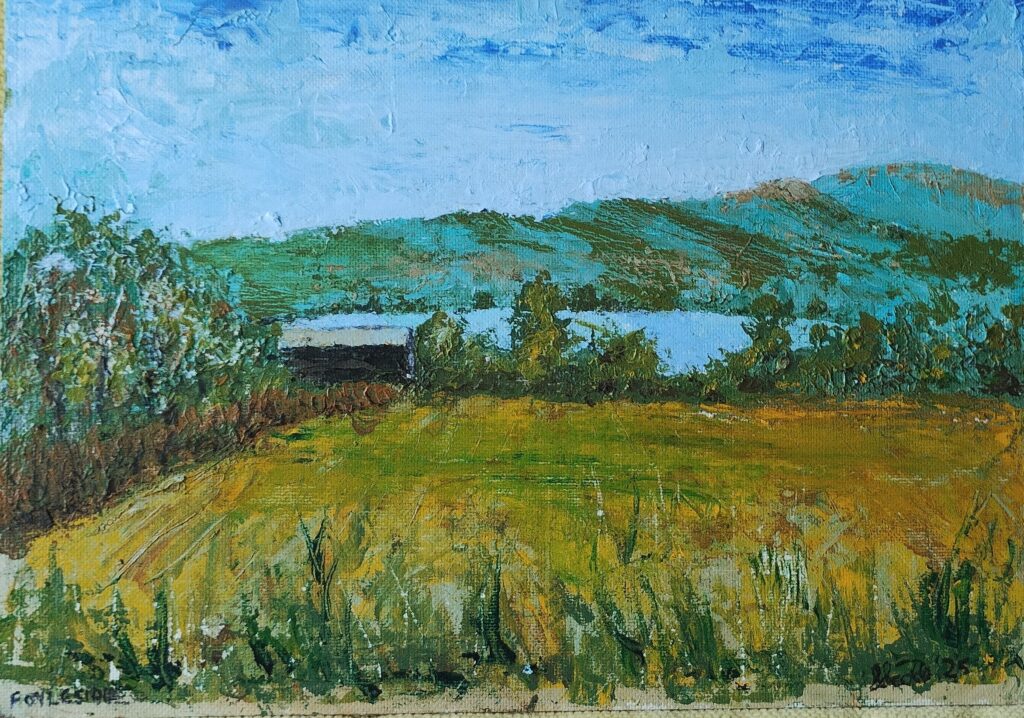
Last week I was at a workshop on using palette knives, which I am not very practised at. I kept at it afterwards and produced the image below:
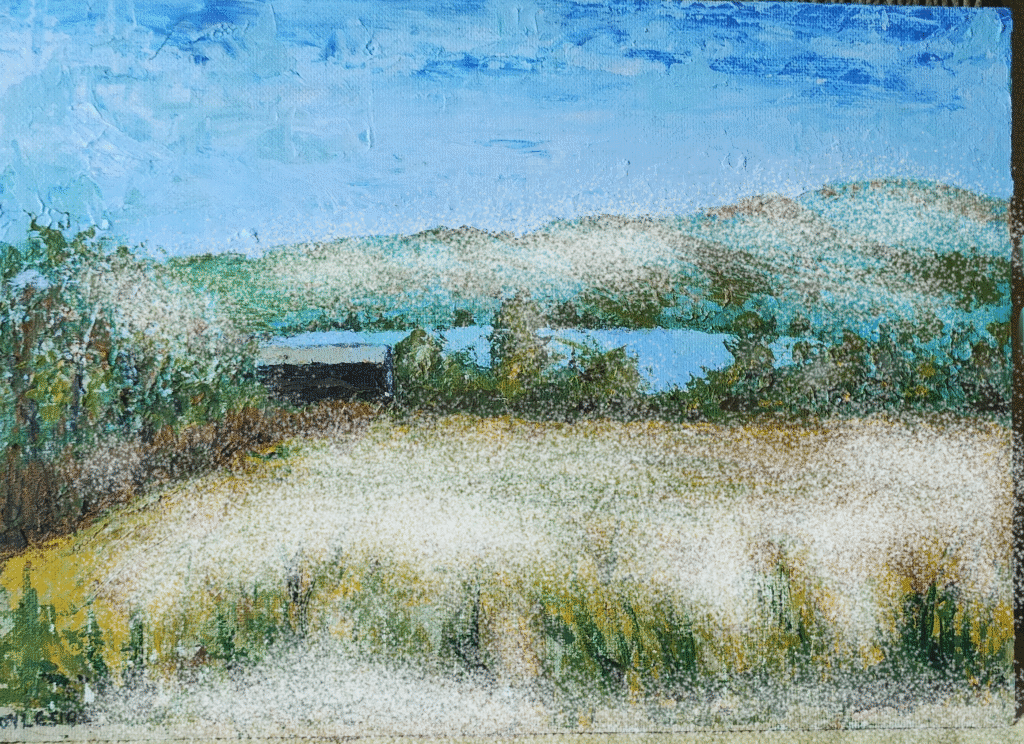
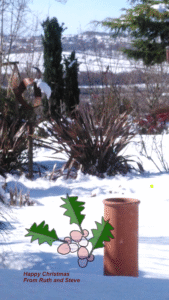
As an experiment I imported that image into the art app I was playing with and added a transparent layer on top (thank you Linda for the idea). In that layer it took around 1 minute to carelessly add some snow. Here is the result:
I use this technique to make things like Christmas cards.
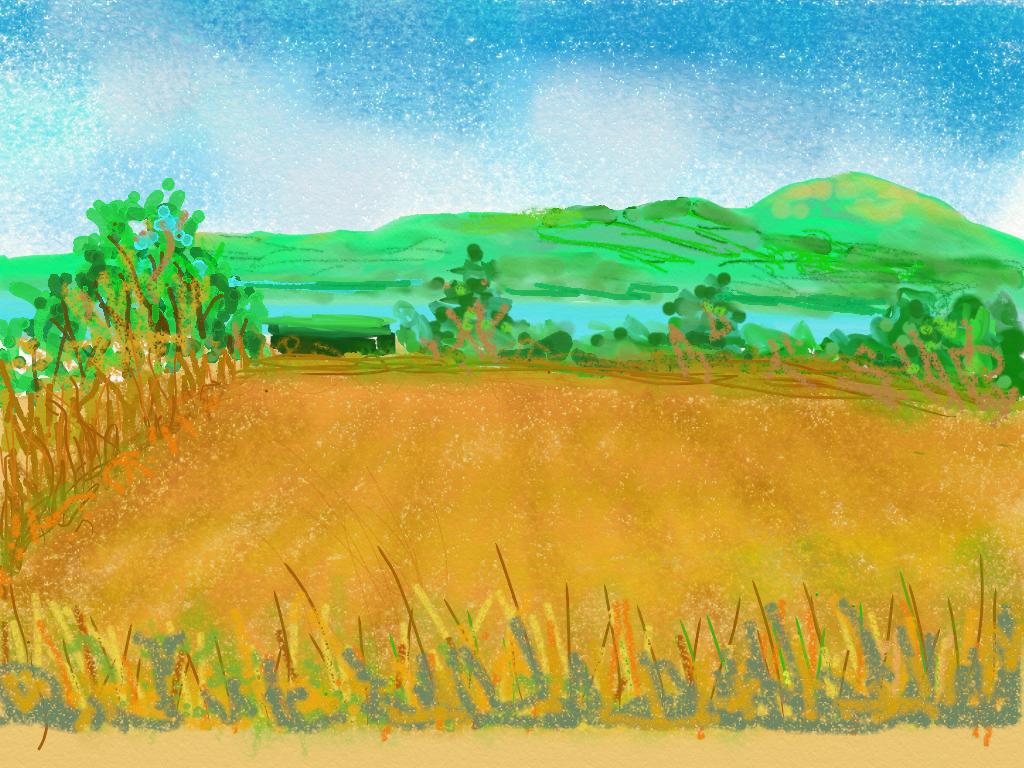
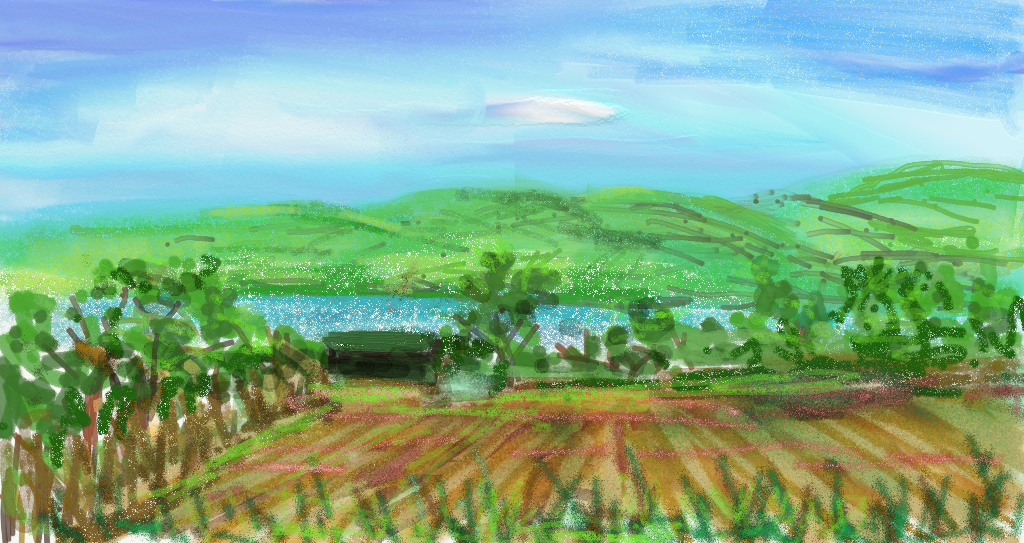
While the landscape images above are here, we might as well look at a quick paint app version, done in a bit over an hour, using my finger as a pointer on an Ipad. I think it is not as good and would have to work hard to make it match.
Here is a version done on my phone:
In both of those images I tried to use the tools available to get a bit closer to the hard copy original. In the ArtRage package there is even a palette knife tool, but I couldn’t get that physical feel. A quick play with Procreate was even less satisfactory, but I am less experienced with that.
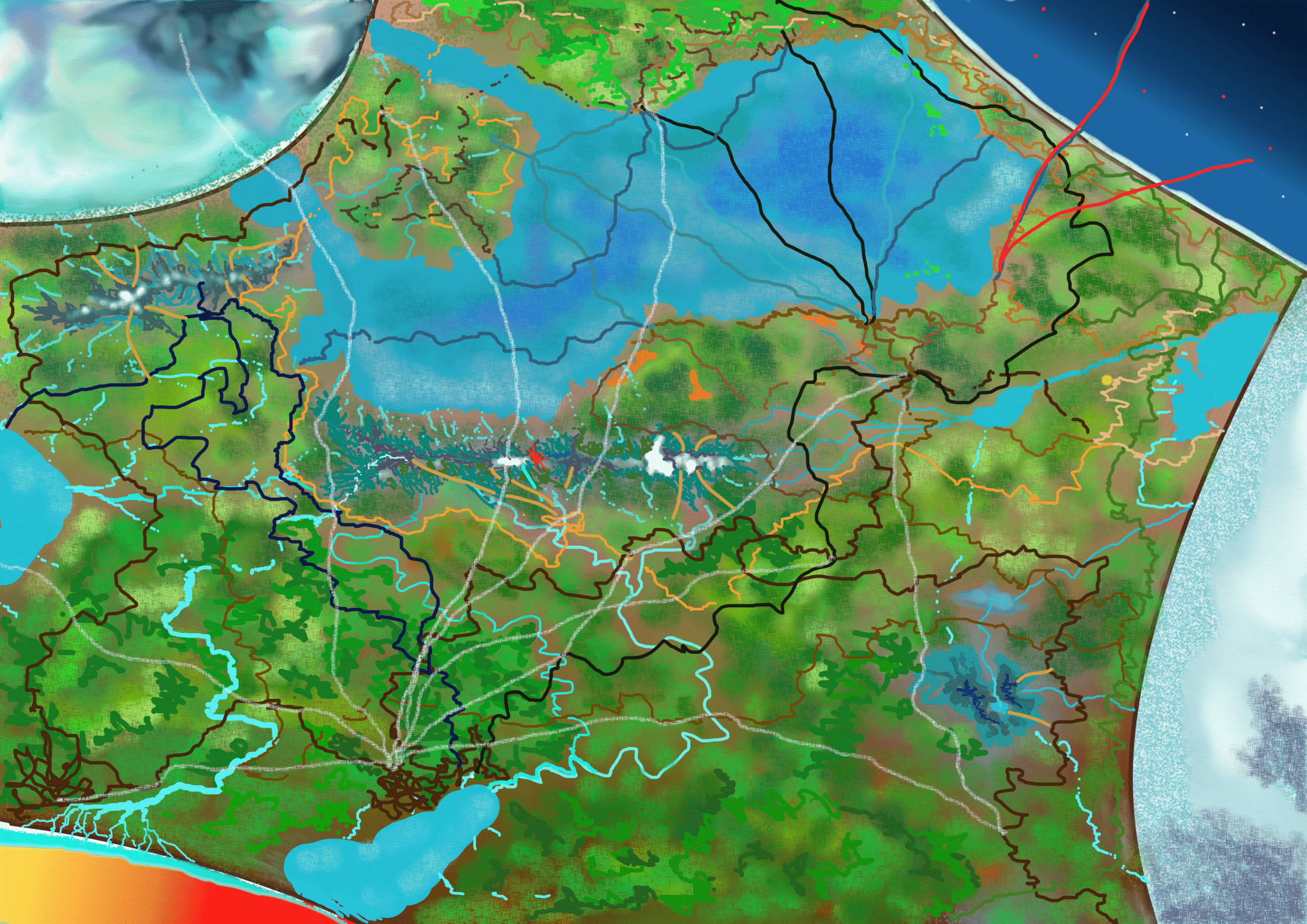
I’ll finish this particular post by repeating earlier advice. Treat the digital art Apps as a different medium. Play with them to see what works for you. Discover how they work best. So far I have discovered that ArtRage seems to work better than Procreate at reproducing different media while still being flexible in use. If you paint or draw detailed and smooth images, rather than textured, then the Apps might make a better job of reproducing what you do. Here’s one about us travelling through the world, that was digital from start to finish:
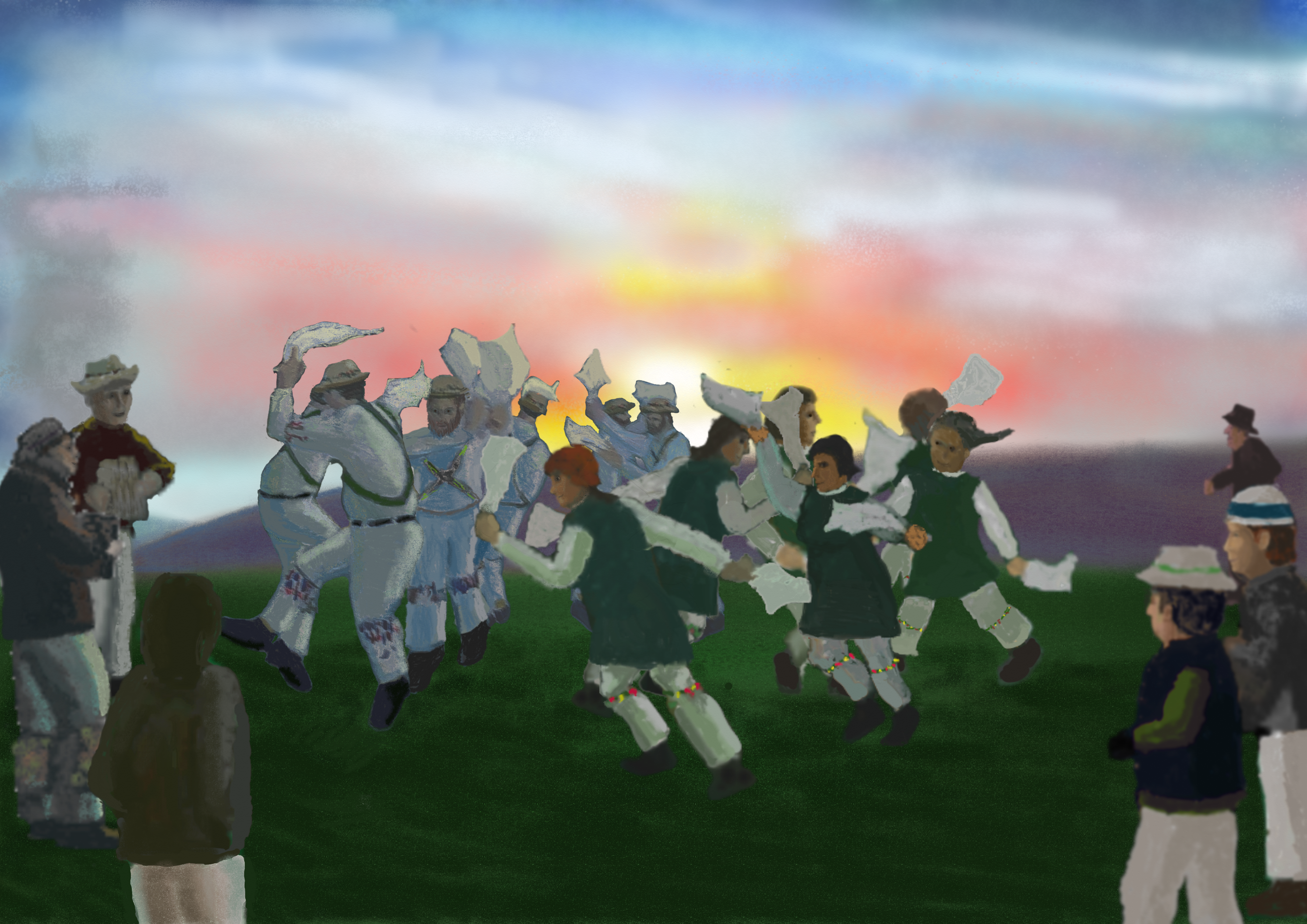
Here is one, called Dancing up the Dawn, that I’m working on. It uses all the techniques covered above:
This is much more complicated and there are basic figures that I have taken from previous work and then altered for this picture. I have used multiple layers to play with the arrangements. If you put a piece of the image in a higher layer, then it will cover the lower layer, so you can play with different overlaps. Even with the background I use two layers to try out different effects, once I had the basic layout and sky. I later went back to the top one of those two layers to play with the shadow effects. You can merge layers when you are happy to make it all a bit simpler to remember and make them temporarily invisible when you are having difficulty working out which layer is which.
Finally on Layers, the canvas is also a layer. You can choose between different canvases. The texture of the canvas will have an effect on what the paint does. All the layers, including the canvas, can normally have varying levels of transparency, so the can either cover up lower layers, where there is drawing in this one, or merge in. This is generally true of the canvas as well, to that the canvas disappears when the marks are printed. This is important if you are sending it to some one to print on a T-shirt or other object.
This image was taken by starting with a watercolour sketch I’d one, adding to it an altered cut and paste from a photograph and then playing with it all in the art package to get an idea of layout. This was then worked up into an acrylic painting.
I’ll just finish by saying a bit about the apps that you can use. There are loads of them and there are similarities but also many differences. I have found that there is no one app that is good for all purposes. They all have quirks. It also depends on the type of computer you use. Apologies that this starts to use jargon but at some point you have to understand different file types, print sizes and other such technicalities to get the best of what you are doing.
First remember photo manipulation apps such as Photoshop or Lightroom and free equivalents, like Gimp. They often have tools that are useful for image manipulation. It may be quicker to export your image, adjust it and then import it again. Next there are simple art apps on most devices that can be a less daunting starting point and a more icon led and more intuitive than apps catering to constant users. Finally there are alternatives to the obvious contenders such as ArtRage that I now use and RealWorldPaint.
When I was sixteen I painted this image of the patterns made by cars and people at a Zebra Crossing. I’ve always been a bit obsessed by patterns of movement and the paths made through the world.
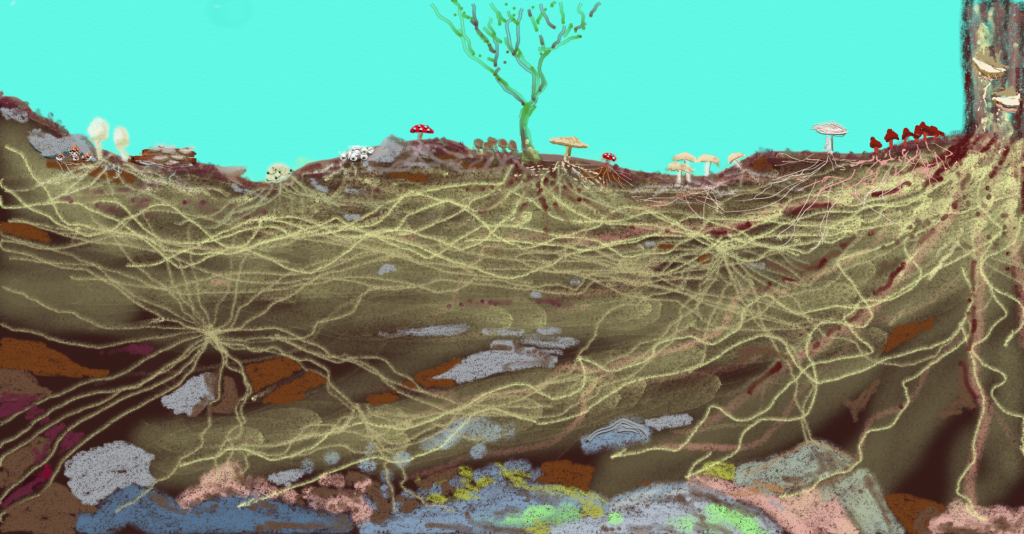
When Shelley Art Group set a fungi challenge, I had a picture in my head but realised I would find it hard to realise in paint, so I tried with an app called ArtRage and was pleased with the result, as were others.
I now have an obsession to realise some of those ideas I have never managed before. Meanwhile my other obsession with Schumpeter and Appropriate Technology has sent me on a slight sidetrack involving creating lots of digital images to incorporate in other pieces.
After several years of problems with Arthritis, I’ve been having to reassess some of my creative activities. I’ve given up chair-making, I’m less physical in the garden and sculpture may tail off from now on. I’ve been concentrating on painting but until I joined https://www.shelleyartgroup.com/ I’d been a drifting a bit. Here’s one on Fungi that has been well received:
Here’s one on our obsession with cars that is still ongoing:
I’ve also come to a decision about my involvement with Yorkshire Sculpture Park. I’ve been talking to people about creativity informally at YSP for around 40 years, but around 15 years ago I started taking tours round there, doing the same. Apart from hip replacements I have been doing that ever since till last year. I have tried other roles there but have not been comfortable with them. You have to know your own limitations. So farewell and thanks to all the people who have helped me at YSP over the years. You may see me wandering around chatting to random people or sitting sketching. I still have my own series on trees to fill up and and my very rapid sketch of the herons could do with more care and attention. Sayonara.
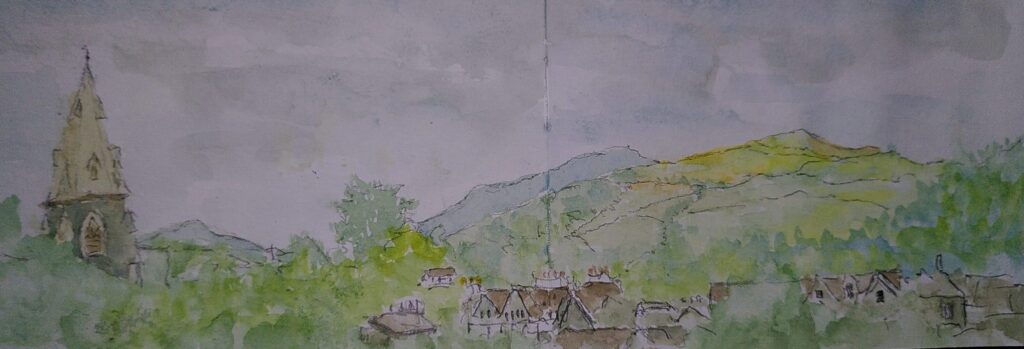
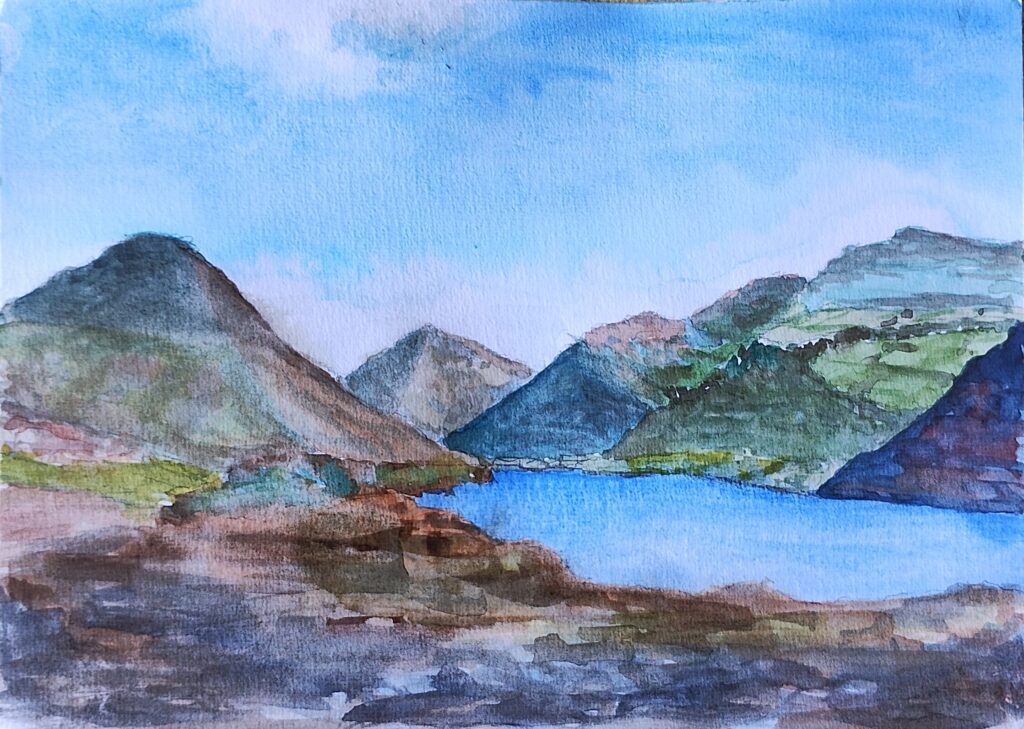
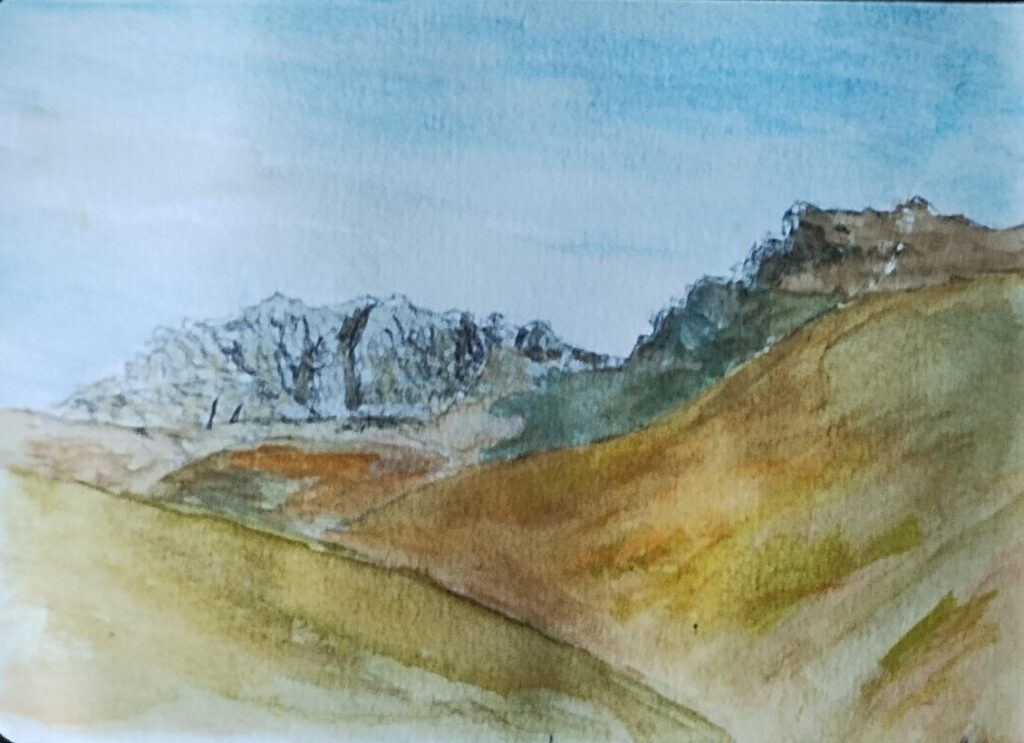
Ruth climbed Scafell Crags today. I painted the scene from below.Later we went for a walk lower down and Ruth left me to paint. The kind people at Wasdale Hall Youth Hostel gave us a warm welcome for a cup of tea.Another day Ruth went on a horseshoe walk round Pillar. I painted the Wasdale Infinity Pool and later Scafell over the trees from the Wasdale Head car park.